Filling in the preparedness plan gaps

I’m sort of done with the big picture planning, and now I’m going back to see what sort of gaps exist in my 1 year plan. I did this by creating a master Excel sheet with every plan item listed, with the quantity/storage location/justification for the amount. Once I did that, it was apparent which things were either missing or short. For instance, I had toiletries and hygiene items but had missed on the amounts and type.  Toothpaste and floss was short, and the wrong type (need powder for long term storage). Toilet paper was another. Once you get it all on paper, you can mentally run through everything you use regularly and see the issues. Calculating your usage is a must, and can be done within the sheet which is handy. One thing that tripped me up is my kid’s needs, when I first started they were preschool/elementary age but now are teenagers. That add two adults to the list, with different needs.

I am getting close to finishing up the 1 year prep plan, most things are in place and it’s a good feeling.  There is the question of how long to plan for, there’s nothing magic about a year but LDS uses it and it is a reasonable time frame.  Anything longer than that would either have to be dealt with by going full homesteader or going nuts on the amount of stored items. I just can’t see a reasonable scenario where I’d need 3 or 5 years with no outside supply or ability to grow food.

As a note, it’s time again to purge and check stock on my 2005 and 2013 items. I had socked away some things long ago that weren’t really meant to last, but they seemed to hold up OK externally. I’ll be sampling things and reporting back, stay tuned for that….


Potato growing year-round

I’ve been growing potatoes on and/off for 5 years, and have finally gotten the process refined to the point of sustainability. The goal was to have a small quantity of spuds in the ground or stored at all times, such that they could be quickly planted and boosted to a staple crop.  Here’s the major findings:

  • Start with the smaller red potatoes in the grocery store as your root stock. I tried all kinds of white and heirlooms, plus seed and had no luck. The store red spuds always sprouted, and were hardy to heat and cold.  If you live in Maine or the NW US the others may be fine, but I’m bullish on the reds.
  • It will take a few seasons for your stock to adjust to the weather. Mine definitely got MUCH hardier after one full season, especially in the heat. I was shocked how well they adapted, kinda surprising. I’ve had them pop up in June and July after sitting in pots or the garden, after I missed them during harvest.
  • Leave unused potatoes in the ground. I tried to store them in a 65 degree cellar, with 65% RH and no light but they all sprouted and decayed. They seem to weather fine in dry soil, fairly deep.  I put a few in the fridge, they did last but I lost some to rot.
  • You should be able to get two or three good crops per year. Mine start in late February in a cold frame, done in late May/early June. Then another starts, with harvest in August/early September. Then the last starts, and will store in the ground until May without sprouting.
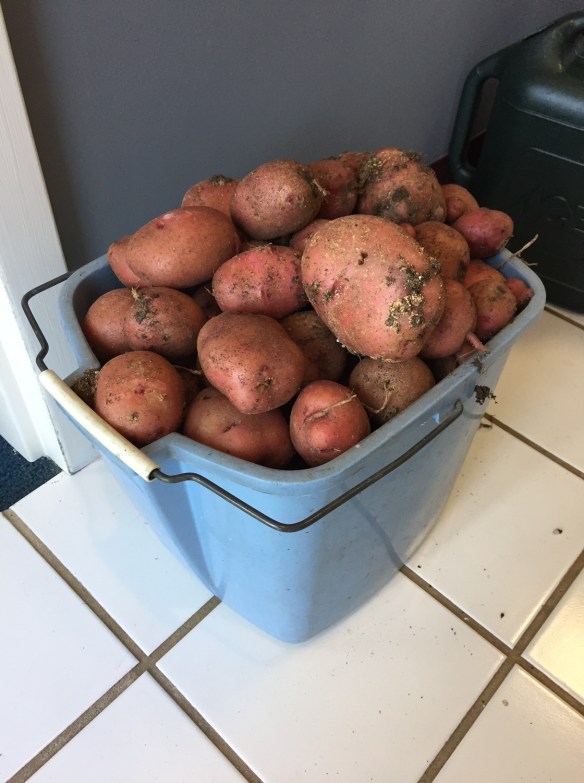
  • Potato towers and pots seem like a waste of time. I couldn’t get ANY tuber growth by piling up soil, just longer stems. My best results were had in small plots, with some hilling. Here’s just part of the haul from a 3×4 ft patch:IMG_2360

Not too shabby, and was not at the limit of what it could produce. I could have probably doubled this by using lots of humus, and careful hilling.

I really enjoy being able to dig a few potatoes whenever I want, definitely a fringe benefit of preparing….


Potatopalooza

It’s been a busy summer with regards to spuds, running multiple growing/storing experiments at two sites. I’ve been trying to do a number of things with them:

  • Establish a continuous supply of seed potatoes
  • Have spare potatoes on hand to consume
  • Figure out how best to store them in all seasons
  • Get them established from true seed
  • Find the best grow media and weather strategies

True Seed

I bought 200 seeds online last spring, and have had decent luck getting them to grow. Maybe half germinate, then maybe 75% make it to the mature plant stage. I’ve found the plants to grow very slowly in early spring, then take off and get exceedingly leggy like tomato vines. These vines grow well all summer until the really hot weather arrives, then they die back.  They seem to do well in the partial shade, sitting on the cool cement pad. Any more sun or being elevated kills them.  They do make 1″ tubers, I have groups of these drying in the root cellar and also dormant in pots. This will be the first crop of TPS spuds, I’m hoping to get them through the winter for early spring planting. These are whites, versus the reds I’ve grown so far.  I’m really hoping to get a spring crop out of these, if they will store. I may need to fridge them in dirt.

Grocery Store clones

These have done the best so far. I started with a handful of sprouting reds, planting them in crap soil (mostly clay)  as a lark. This crop came up last fall, went dormant, then came up again strong in late spring. I learned a few things from that:

  • Mulch the soil. Yeah I read this a million times, but it really is vital. You have to have loose soil with plenty of organic material for the tuber to grow into. Regular dirt works but doesn’t give them enough room to take off.
  • Mounding is overrated. I haven’t been able to do the potato tower thing at all, I get no tubers above where they first really grew foliage. Maybe it’s the pots, I have a new crop coming up now in good ‘ol black humus and we will see how that goes. I’ll mound those up and see what happens.
  • Dug potatoes only store in the cold. I had a couple of batches in the 68 degree cellar, the only lasted 5-6 weeks before they sprouted. These were dug in late July, versus some I had that went 4-5 months outside in pots during the winter. I kinda knew this but tried to cheat nature. They did, however, do quite well as seed potatoes and are shooting up in the new patch.
  • Hot weather is nearly as deadly as cold.  The potted plants hate the hot, I got a lot of die back in the summer vs the spring/fall. The ground plants handled it much better, which stands to reason but it’s interesting.
  • Reds are more robust than whites. Must be the climate, but so far they have been way better. I have different varieties of whites and they are all lacking.
  • Homegrown taste way better than store bought.  I have a hard time eating anything but my own now, there’s just no comparison.  This is a great excuse to grow potatoes, the ends justifies the small effort involved. I made mashed and roasted from the extra reds I got in July, OMG they were good.

What amount of prepping is enough?

I ask myself this, especially as I’m getting down to crossing off the last handful of items on my big list.  On one hand, it is very nice to have certain things on hand for the occasional ice/heavy snow storm or summer storm power loss. On the other, some things can seem like a waste viewed in terms of the probability of occurrence. I’ve tried to only get things that have a dual use, but isn’t always the case. For example, I bought a small wood burning stove with sidesaddle water heater. If I ever buy some undeveloped land, that can get installed in a cabin. But freeze dried food, that will never get used.

I suppose the goal is to keep certain critical items on hand for a short time frame, but not go hog-wild. MREs and firearms are in that latter category, expensive and not required but seem like a major preoccupation with some people). I’ll add things like gas masks (what’s up with that?), bug out bags, night vision gear, camo, etc. It’s as if this is some paramilitary adventure, versus long-term camping.

Anyway, I am satisfied with what I have and don’t feel the need to do much else. I still need to get a big first aid kit, some bleach powder, protective gear for contagion, and a laundry plunger. That’s it, everything else I have. Frankly, if anything does happen plans will have to be formulated on the fly anyway. I just need the basics . I suppose this is the difference between being OCD/hoarder and prepared, is it enough or irrational acquisition?


Cash in an emergency

A few weeks ago, we were out and about and stopped by an Arby’s to pick up food for a sick relative. When we went to order, the cashier said their POS (point of sale) terminal modems were down and they could only accept cash.  This rarely happens, but luckily we had sufficient cash on hand to pay. It was interesting to see how many people didn’t, I’d say maybe 1 out of 4 or less had even 10-15 dollars on hand. It was a stream of people in, then out when they found out it was cash-only.

I had added paper money to my emergency check list, but never had time to get to the bank to make a withdrawal.  I finally did this, it’s something that you would definitely need even in a very short duration power loss as with windstorms or ice.  I forgot how much people have moved to electronic payments, if for some reason communications are interrupted you have NO way to pay for ANYTHING.  If there’s some sort of major outage for any reason, including a coordinated attack on comms or the electric grid, it would be catastrophic solely due to the lack of commerce let alone anything else. It’s just another thing that you don’t want to have zero reserves of.   I’m sure business would be able to conduct local transactions manually, but if you don’t have money there’s no way to make withdrawals. The banks wouldn’t be able to debit accounts without access to databases, nor would B2B work as that is all electronic. There would be a window where things would work more or less normally, but when restocking was needed it would get interesting.


Media bias against emergency preparedness

I just received the latest issue of the Economist, and this was a featured article:

Preparing for the apocalypse

I will survive

When civilisation collapses, will you be ready?

This is typical of media coverage of any civil defense or preparedness, they go out and interview the most far-out people they can find and represent that as the norm. The title is exactly what anyone should NOT be preparing for. No apocalypse, no collapse of civilization. Civilization will continue, but to assume every aspect of life will go on just as it does now regardless of circumstances is just foolhardy.  I really wish there were no paranoid gun collectors living underground pimping MREs and iodine pills.  It stigmatizes anyone who practices preparedness, regardless of the nature or extent of that activity.

I recognize and understand the statistical unlikelihood of having an emergency, but that’s not to say it will never occur. And, we never know what could happen so it’s not a bad thing to be ready, as long as that doesn’t become an end to itself or interfere with daily living. For instance, years ago we have suffered through several ice storms with extended power outages, and were not doing that well after a few days. If we had had just some of the things we have now, we would have been comfortable versus freezing our asses off, in the dark, and piling food outside to keep it from spoiling.

I can’t talk about any of this in the open, so I can only post on-line using a pseudonym. It would be great to involve my neighbors but I know where that would lead so I don’t. It seems to agitate liberals that preppers are secretive, that it’s somehow selfish versus a reasonable position given the circumstances.

Finally, the thing that really irks me is the gun fetishes. Guns are such a polarizing subject to begin with, then to opine on how it’s going to be Stalingrad every day so you better stock up is just ridiculous. I will touch on firearms one day, but I sincerely believe they are a last resort and in all likelihood not going to used in anger. Thirst/hunger/fatigue will prevent most of the trouble mooted on message boards.

Sure would be nice to have a more balanced view of the movement, I did see that younger people are getting into this but more on a local/group level vs the survivalist. I haven’t seen much coverage but maybe it will become more mainstream one day.


The winter garden

IMG_1395It’s almost Christmas, and the carrots and broccoli are still green and outside. This was an unintentional experiment, I was too lazy to move them indoors but now it’s fun to see what happens. Average overnight temps are in the mid to high 30s, and it can get in the 60s during the day.


The broccoli has flowered already, and doing it again which was a treat. Delicate yellow flowers in the late fall and winter, they are what comprises the broccoli heads before harvesting. Mine were tiny and hardly worth cutting, but they made great blooms.

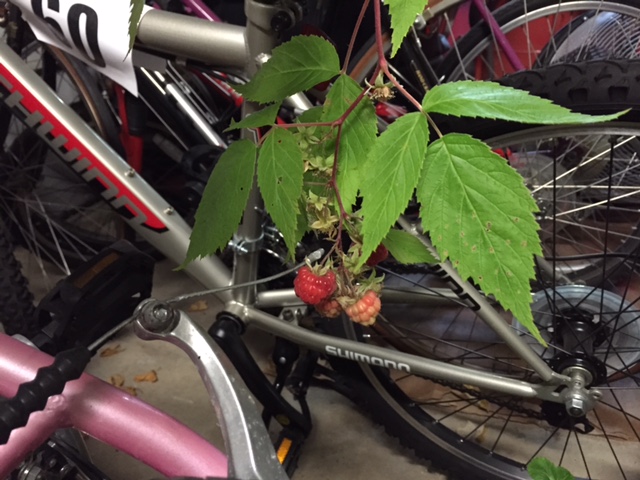
Onions, peppers, and berries are in the garage and are producing but very slowly. I enjoy getting berries in December, and the peppers will probably ripen in the spring when the temps go back up.

IMG_1375Berries!

Both the Caroline and Heritage plants made a third crop, these are the berries.  Blackberries are outside overwintering.


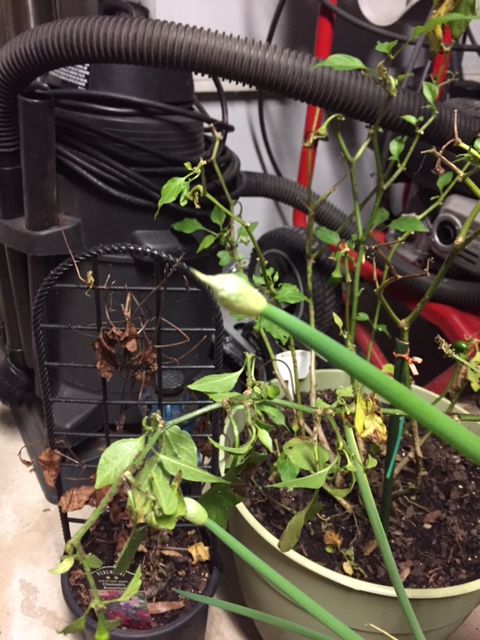
Onions making seed pods

IMG_1394I got a ton of green onions from the other pot, this one was an experiment to see how long I could stretch it and still get usable produce. Seeds pods were a mulligan… Mild hot peppers are in the background, creeping along.


Other developments

I harvested seeds from just about everything, they are in paper envelopes in the fridge being dormant. I will plan these guys next spring, fingers crossed I’ll get plants despite them being hybrids.  Winter wheat went in last week, I learned to plant the correct density and to add the correct top dress nitrogen fertilizer at sowing. This is what the farmers do, I’m learning agonizing slowly what they all know.  Apparently spring wheat isn’t too common here due to the heat, mostly winter wheat which I was about a month behind on getting in.  The summer/fall crops I put in were stunted and moldy, lack of nitrogen and bad timing. But they did make wheat berries, which will get planted come March. I could have three wheat crops, just about evenly spaced in time but the late summer would be iffy.

Sunflower oil

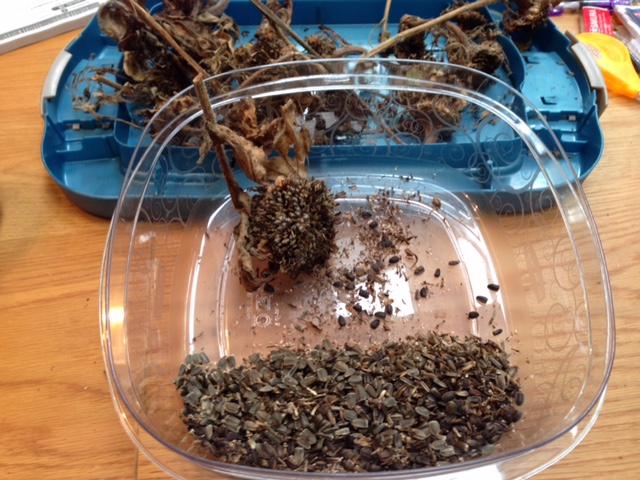
Here’s some of the seeds I got from my sunflowers. IMG_1341


PITA to get the seeds off the plant. I found a link to a homebrew oil press, and got the steel pipe to fab the outer housing. Looks like I have to stick the seeds in blender and then heat and compress the pellet to extract the oil.

http://journeytoforever.org/biofuel_library/oilpress.html

These seeds weren’t the kind you see in the store, they are less robust and the husk is tightly bound to the kernel. I have about a 3/4 quart of oil seed, hopefully I can get some oil to see if it’s worth a damn.  If not, I can buy some seed to test the press and then fool with the sunflowers later. I will eventually need to build or buy a huller, apparently they are very uncommon and don’t work worth a hoot. The principal is simple enough, a rough rotating cone working in a tapered bore with a feed slot and adjustable spacing but they execution is bad.  I can fab a cast iron model but I might try to score an antique off Ebay to save time.

Flying Pests

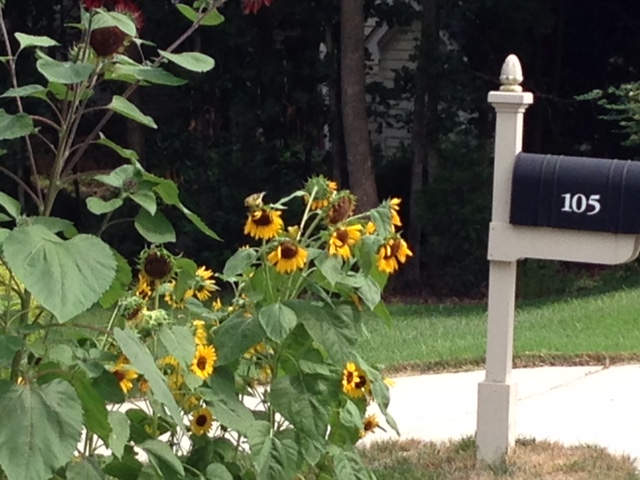
Look closely. Fargin’ goldfinches pillaging my plants, so a lesson is to factor that in. I figure a 50’x50′ area will produce way too many for a few birds to make a dent in.  Bees LOVED these, which offset my fury at the finches. But who can stay mad at them, they are just too darn cute.

IMG_1267


IMG_1244


Life on Day366

So what would we be doing on Day366? That’s where my thinking led me after running though the minutia of planning, i.e. “oops I just ran out of everything” after surviving whatever it was. I realized that the situation would be analogous to being a homesteader. You get off the trail, go 300 miles into the wilderness with your wagon and set up shop. All you have is what you brought, and what you can grow/hunt/collect.

They key is having access to land. You need at least 1/4 acre to put in enough garden items in quantity to last the year. Most people (me included) live in built up areas and suburbs, so there’s some area but not enough to put in cereal crops and keep animals. Here’s my current plan for subdivision farming, it’s in the initial phase but I think it’s viable:

1. Go vertical.

There are planters that can be set up to grow in multiple layers, that’s needed to maximize the volume of plantable soil.

2. Potatoes.

 Spuds yield well in planters, and would have to be a staple to provide enough calories. I can’t think of any other crop that beats it for yield. They keep well, and propagate from eyes on the parent tuber.

3. Sunflowers.

Hugely important, as they provide nuts and vital oil. This is probably the only practical way to obtain vegetable oil off-grid, and without fats and oil you starve. There are small-scale screw drive oil presses on the ‘Net, they seem to do a good job of extracting the oil and are reasonably priced.  The sunflower plants would need a lot of area, it would be a split between those, a garden, and wheat.

4. Garden.

The usual mixes, planted in said vertical pots. You would need to devote more space to things that can be stored in a root cellar, like onions, carrots, beets, etc. Come winter that’s all that’s available.  My parents had these special wood bushel baskets for that, everything went in there and in the vented crawlspace/basement. I’d need to score baskets, I have nothing like this now.

5. Wheat, corn, and other cereals

I think you’d need some amount of corn and wheat, although I’m skeptical that you’d get enough in to make a large quantity of kernels. It takes a lot of plants to yield, typically 50 bushels/acre. So it looks tough to get enough cereals out of a small plot to live on.

6. Wood.

Technically not farming, but this would be the only way to cook and heat. Harbor Freight makes a $170 cast iron wood stove, that and some 6″ black pipe and I’m set. Have to go cut wood and season it, but we used to do this and I’m very familiar with it. Byproduct is ash, that can be used to make lye and then soap using the sunflower oil.  PITA, but doable.

Well, that’s the extent of the plan. If successful, I’d have the same standard of living of an 1850s Irish peasant, alive but none too happy.  This is what the plan lacks:

  • Meat. Need chickens, that would be fabulous. We ran a small poultry farm, so again I know how but I have none on hand.
  • Milk/butter/cream. This is pretty much out of the question, without dairy cattle.
  • Sugar. Comes from beets and cane, not happening. Maybe bees, but once again I have none.
  • Fruit. There’s a possibility for strawberries and blackberries, but they can be hard to start up. Can plant trees but takes years to produce.

I will be trying all these things out in small scale, to see how they work. I researched all of this, it’s just a matter of buying the seeds and a bit of equipment.

The irony of Newtown

I had been thinking about getting some high cap 22 clips, and checked Cabela’s to see if they had stock. Zero. Why? The recent dustup about assult weapons and high capacity magazines. Apparently the threat of these items being outlawed has resulted in the near-total cleanout of all larger mags and assault weapons, and a lot of ammunition.  People are backlogged to buy them, so we have the Law of Unintended Consequences giving us far more of the very thing we didn’t want. By we I mean the current administration and the anti-gun people. I personally think they are of little use but irrelevant to mass shootings. 10 rounds at a whack and an extended mag lever means one could bang out shots more or less continuously, doubtful the slight pause wouild allow anyone to take down the gunman.

It’s just annoying how the real problem got lost, which is no guards at schools and allowing mentally ill people to acquire firearms.  Now there’s going to be a LOT of AR-15s in circulation that would otherwise gone unmade and unsold….just what we needed.


Why Day366?

This blog is intended to be a resource for people who are interested in emergency preparedness, with a focus on long term strategies. The title “Day366” refers to the idea that it’s great to prepare for a year, but what happens on day 366? There’s a lot of discussion and awareness of the subject lately, due to TV shows about preppers and fictional accounts of apocolyptic events. There’s also a lot of misinformation, myths, and plain nonsense about what would happen in various scenarios and how to respond to those events. One of they key aspects of preparedness is planning, but how do you plan if you don’t know what is going to occur? I’ve seen many blogs and individual posts about people stocking up for the Big One, but very little though on what exactly what that is. If you are going to prepare, it makes sense to spend your time and money on the right things. Otherwise you may end up with a false sense of security and be as bad off as doing nothing at all.

I’ve modified my view of preparedness over time, mostly by thinking through the various scenarios and reading other people’s posts. It’s definitely a work in progress, you can’t really ever say “yes I’m good to go”  unless you live in a Swiss mountain bunker with 0% reliance on the outside world. Most of us are stuck with a finite budget, time, and space so it’s even more of a compromise. But hopefully we can make enough of a plan to achieve the end goal getting ourselves and our family through a disaster. That’s what counts.

This is good place to stop the introduction, and move on to the first post.