Results of the 2018 storage check

It’s that time again, it’s already been close to 5 years since I last cycled through the mid-term storage items.  I had checked my boxed up freeze dried stuff back in 2016, but I didn’t do a detailed check of the bins where I save the grocery store type stuff. Here’s the highlights:

  • Kool Aid packets. Fail. They picked up up moisture and formed a puck inside the packets, plus they changed color and got some green specks which I’m pretty sure aren’t flavor crystals. These may have been from 2005, so I can give them a pass but they don’t last all that long sitting around.
  • Gel deodorant. Fail. Turned into liquid, thankfully they stayed sealed.  Same thing, 2005 vintage, but I’m going to solid stick now.
  • House brand liquid dish soap. Win. Perfect, from 2005.
  • Book matches, 1000. Win. Had rusty staples but struck like new. 2005.
  • Flour and corn meal.  Fail.  Picked up moisture and odors from other items. 2013.
  • Sugar (bag). Fail. Moisture on the bottom of the sack. 2013. Guess it’s hygroscopic.
  • Peanut butter. Win.  Looks and smells perfect, 2013. This will go back into storage until 2022, it will get pitched then. I pick up 4 huge jars every 4 years.
  • Oil. Win. Looks and smells perfect, 2013. Same as the PB, 8 year life. 
  • Yeast packets. Win.  Looked and smelled great, and proofed just fine. 2005. I’ve since switched to glass jars, but the packets held up. A big surprise, everyone claims they go bad but apparently not.
  • Aspirin. Fail. The pills had crystal whiskers growing out of them, and were clumping together, 2005 . I figured aspirin would last for decades, guess not.

Funny how many things go bad after a few years, even when you try to keep them in a favorable environment. This is one of the things apocalypse movies get wrong, things just don’t last.
 

Filling in the preparedness plan gaps

I’m sort of done with the big picture planning, and now I’m going back to see what sort of gaps exist in my 1 year plan. I did this by creating a master Excel sheet with every plan item listed, with the quantity/storage location/justification for the amount. Once I did that, it was apparent which things were either missing or short. For instance, I had toiletries and hygiene items but had missed on the amounts and type.  Toothpaste and floss was short, and the wrong type (need powder for long term storage). Toilet paper was another. Once you get it all on paper, you can mentally run through everything you use regularly and see the issues. Calculating your usage is a must, and can be done within the sheet which is handy. One thing that tripped me up is my kid’s needs, when I first started they were preschool/elementary age but now are teenagers. That add two adults to the list, with different needs.

I am getting close to finishing up the 1 year prep plan, most things are in place and it’s a good feeling.  There is the question of how long to plan for, there’s nothing magic about a year but LDS uses it and it is a reasonable time frame.  Anything longer than that would either have to be dealt with by going full homesteader or going nuts on the amount of stored items. I just can’t see a reasonable scenario where I’d need 3 or 5 years with no outside supply or ability to grow food.

As a note, it’s time again to purge and check stock on my 2005 and 2013 items. I had socked away some things long ago that weren’t really meant to last, but they seemed to hold up OK externally. I’ll be sampling things and reporting back, stay tuned for that….


Cash in an emergency

A few weeks ago, we were out and about and stopped by an Arby’s to pick up food for a sick relative. When we went to order, the cashier said their POS (point of sale) terminal modems were down and they could only accept cash.  This rarely happens, but luckily we had sufficient cash on hand to pay. It was interesting to see how many people didn’t, I’d say maybe 1 out of 4 or less had even 10-15 dollars on hand. It was a stream of people in, then out when they found out it was cash-only.

I had added paper money to my emergency check list, but never had time to get to the bank to make a withdrawal.  I finally did this, it’s something that you would definitely need even in a very short duration power loss as with windstorms or ice.  I forgot how much people have moved to electronic payments, if for some reason communications are interrupted you have NO way to pay for ANYTHING.  If there’s some sort of major outage for any reason, including a coordinated attack on comms or the electric grid, it would be catastrophic solely due to the lack of commerce let alone anything else. It’s just another thing that you don’t want to have zero reserves of.   I’m sure business would be able to conduct local transactions manually, but if you don’t have money there’s no way to make withdrawals. The banks wouldn’t be able to debit accounts without access to databases, nor would B2B work as that is all electronic. There would be a window where things would work more or less normally, but when restocking was needed it would get interesting.


Impeller pressed sunflower oil, DIY

Background

With the recent cold and rainy weather, I finally had time to try out making my own sunflower oil. Using the press I built (see the older post on sorghum syrup), I followed the instructions on this site:  http://journeytoforever.org/biofuel_library/oilpress.html

I used oilseed purchased on Amazon, spendy but I got a load of seed for experiments and for fridge saving over a few years. There’s enough to sow a large plot with enough plants to generate a years supply of oil. My biggest issue was pests, mostly finches but also deer and squirrels. Once you have a large enough plot, there’s not enough pests to get the whole thing, assuming you put up a fence to keep the 4-legged critters out. Birds will eat as much immature seed as they possibly can, they are voracious pests so plan on loss unless you can add plastic mesh overhead.

The process

Starting with cleaned black oilseed, use a kitchen blender to shred the whole seeds until it turns into coarse flour. You can only do about a half quart at a time, once the flour forms the whole seeds stop getting to the blade.  Heat the flour up in the oven until it gets to about 150 F, this allows the oil to become less viscous and flow out of the slug inside the press. Don’t be afraid of overheating it, it cools down quickly and you really need a hot press to get the oil out. It will help to preheat the press itself, it will keep the slug warm. You will also want to add heat to the press with a heat gun, to keep it from cooling off.

Load the press full, then compress it by hand to pack as much in as you can. The sleeve will compress 3-4 times in volume, so expect that. You will also need a very large force, I used a 2 ton hydraulic press for the pressure. This was just adequate, the press was binding and at the limit of what I felt comfortable with. Still, it worked very well but could use refinement.

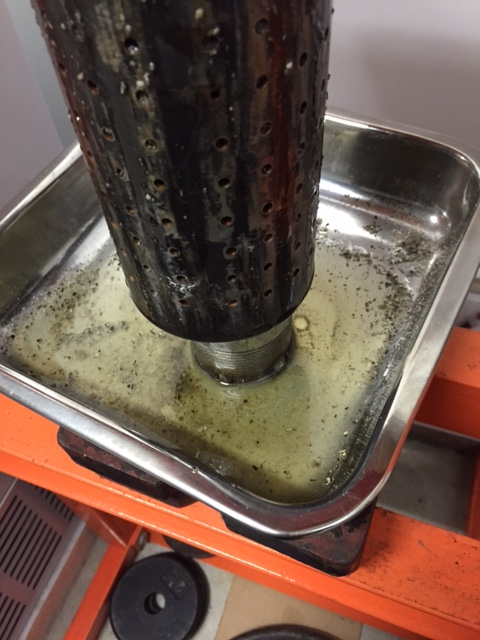
Towards the end of the pressing

I initially got nothing out of the slug, I was thinking “this is a bust” but it finally began flowing out the ports. It took a while, applying heat, cranking the press, and letting it rest. It eventually compacted to an end stage where no additional oil flowed, that’s time to collect and filter the oil.

IMG_1869

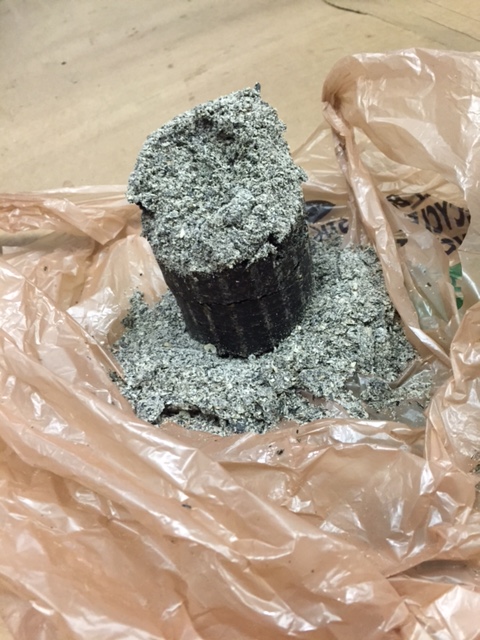
The spent slug (turd to some LOL)

Looks like wood ash, but it’s just the flour. It is as hard as a rock, and requires a large screwdriver and mallet to break free from the press sleeve. Lots of people complain about this, the little screw presses are really tough to clean from what I hear. I’m also not sure they generate enough force to clear all the oil from the “cake”.

IMG_1871

Collecting and filtering

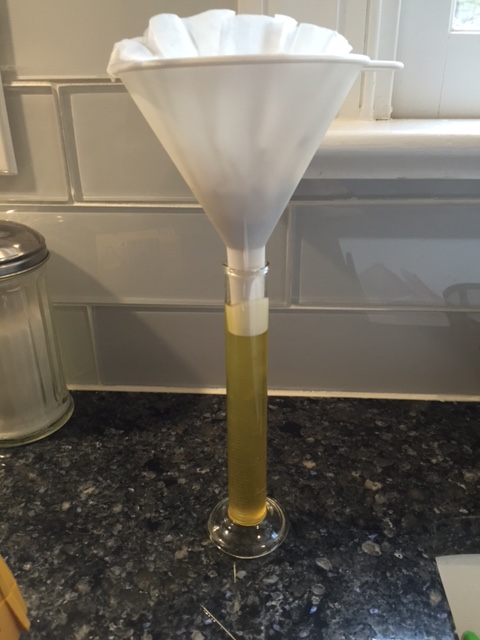
I heated the pan, and poured the hot oil into a coffee filter lined funnel on top of a 25 mL graduated cylinder. I wanted to accurately measure the yield, and I got just about 50 mL from a quart of loose seed (not flour). This seems to be about the right yield, looking at reference site’s numbers. It looks great, nice and clear but took overnight to clear the last of the oil through the paper filter. Coffee filter are around 15 microns, this is too small for a gravity filter and especially oil. I will get a 25 micron mesh and see how that goes, I don’t recommend paper for an oil filter unless you pressurize. Next steps are to fry some stuff in the oil, it’s in the fridge waiting for the test. Supposedly oil will turn rancid quickly at room temps, so I’m being cautious.

IMG_1872


Winter time harvest

Wheat Bread

I finally got around to grinding the wheat I grew, then making bread. I used an Oster bread maker, it worked quite well but still needs improvement. I didn’t know about the need to use less yeast and let the dough rise for 3 hours, that avoids the collapsed top common to the heavy wheat flour.  I also skipped the multiple knead/punch/rise steps, I found it’s better to just do a single 12 minute knead and then a slow rise. It makes the loaf a lot lighter. Here’s the result:

IMG_1822

This was a 1.5 lb loaf, as you can see it was pretty decent in terms of the rise and the density although I kick myself for not letting it rise to the top of the pan. I was worried it would collapse, but I don’t think that would have happened.  It tastes great, it was the Oster manual recipe and no complaints about that.  Pretty cool, I went from a handful of seed to actual bread.  I’m out of homegrown wheat, so I am using the Emergency Essentials cans to continue the breadmaking process improvements. I hope to eventually make first class bakery style bread, but this is perfectly acceptable for survival.

Potatoes

Recall the red new potatoes I put in the planter? Well, those grew like mad until Christmas and then died. They did make a fair size crop of new tubers, I was so excited to see the little guys buried in the dirt:

IMG_1819

I boiled these and we ate some with butter and thyme, then the rest fried. They had a very delicate flavor, I’m not a big potato guy but they were as good as the store. Win there too.

Things have settled down now that cold weather is here, not much to do outside just waiting for the last heavy freezes to pass to plant again.  I’ll probably try the wheat bread again, and see how much better I can make it.


Plans for next season and musings

I have a number of things I want to try, based on what I’ve tried so far and what’s left to accomplish. The goal was to grow every survival-style crop, either in a pot or in a small section of garden, and be able to get a decent yield and seeds for future use. I also wanted to harvest, prepare, and store each one. Here’s the “success” list to date:

  • Carrots
  • Onions
  • Wheat
  • Basil
  • Berries
  • Chives
  • Kale

Here’s the ones I am still working on:

  • Oregano (waiting for them to go to seed)
  • Broccoli. I just cannot win, the damn worms strip the plants or they flower immediately without making a decent floret. I may try using new dirt and putting window screen around them to keep the moths out.
  • Leeks. I have a crop in a totally inadequate location, will try again but fingers crossed they may shoot up in the spring.
  • Celery. Grew fine but waiting on seed….
  • Potatoes.
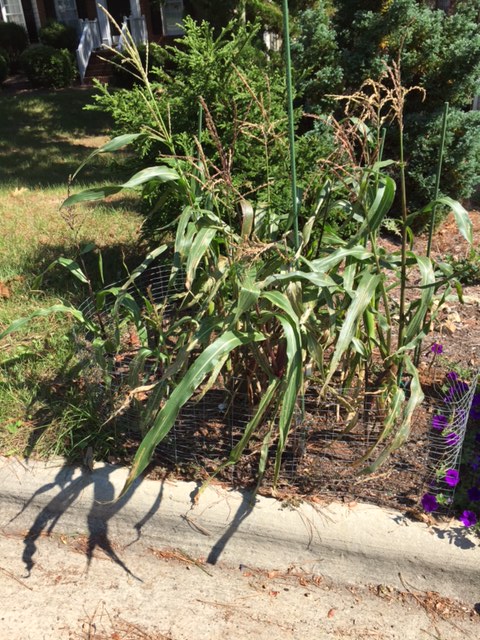
  • Corn. It’s a variety/timing issue, I can get small ears of the painted mountain corn but it’s just not yielding. I have plenty of seed now, but now enough to mill into corn meal. Here’s the plants at the peak:

IMG_1707

Next spring:

  • Sweet corn.
  • Sorghum. Big win, will do a large plot and then refine the syrup making process. I keep finding out what I’m doing wrong, last time it was not allowing the syrup to settle out the sediment and starch particles, plus not taking the stalks at the soft dough stage. I wanted to get a ton of seeds, so I left them in too long. It made the syrup taste grassy/borderline unpleasant.  I’ll also make the big press, the little one was a total PITA to run.
  • Peanuts. High hopes for these bad boys.
  • Herbs in the ground vs in planters.

Wheat is on!

Wheat

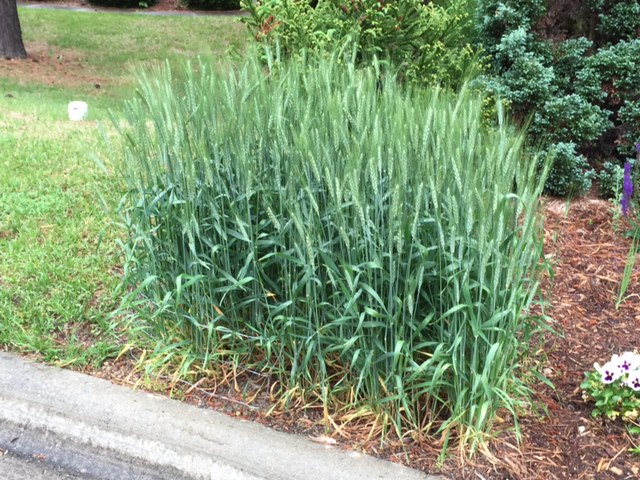
The winter wheat has done very, very well and has headed out:

IMG_1494The trick was adding straight nitrogen grass fertilizer when I plowed it up, and then “top dressing” more when the flag leaf appeared. Being related to grass, it likes the same conditions and you can get everything at the hardware store to take care of it.   Around July it should ripen and be ready to cut and thresh.

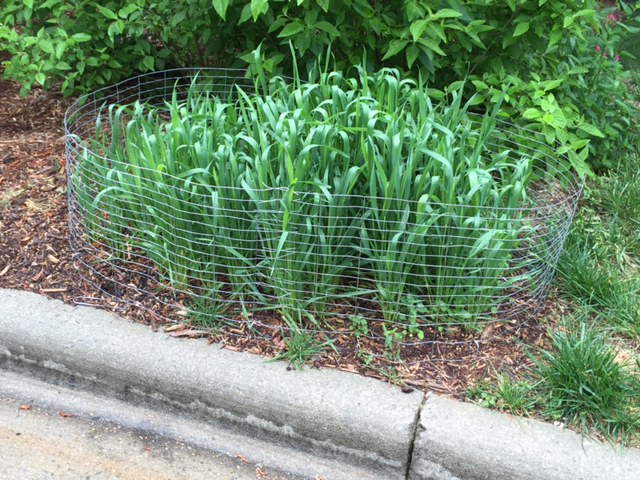
Summer wheat is following the same path:
IMG_1495The flag leaves are appearing, tillering fine and looking fabulous. You only need to plant a single seed every 8-12″, the plant “tillers” and spreads out. Sowing broadcast style (I did this last year) wastes seed and seemed to starve the plants.

Other developments

Sunflowers and the oil press

I secured an area around work that is open and unused, I put in around 50 oil seed plants so I can get a gallon of seed for the oil press. I fabricated the press last year but haven’t had to time to squeeze the small batch of seed from last years crop.

IMG_1496

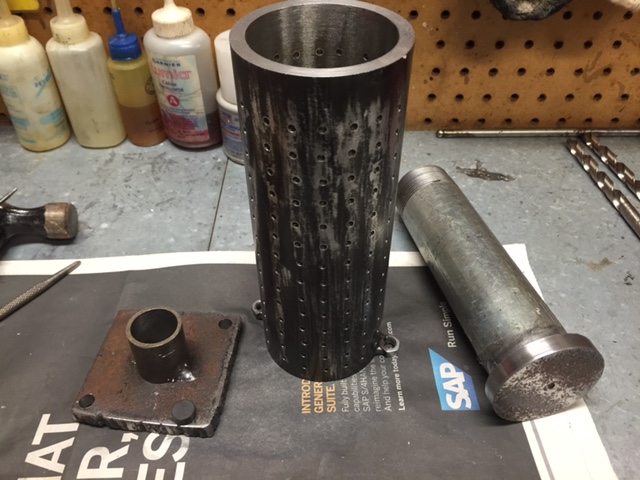
This is a modification of the old 70s article design, I used a special top plate (on the left) with a sleeve to fit the Harbor Freight hydraulic press pilot rod. The ram (on the right) fits inside the cylinder, and rests on the metal collection pan which is on top the big baseplate supplied with the press. Note the nuts welded to the cylinder; those allow easy cleanout of the compressed seed bolus which is a major PITA on other presses.  Been too busy to try it, but it should work.  Side note: it takes FOREVER to drill all those 1/8″ holes in 1/4″ steel, gotta buy 2-3 carbide die drills and use a drill press with V blocks if you value your sanity. I guess you could do it with a hand drill and plain drills but I wouldn’t want to.

Carrots

The damp sand mini root cellar worked awesome, I filled a big Tupperware bin with play sand and set 10 carrots in it last October. I pulled them out this March, most were just fine but some rotted. The taste was sort of funky, they should have been outdoors but they were in my basement at 55-60 degrees. They weren’t nearly as good as the ones I left in the pots, but would have been fine cooked in a stew. For survival = win.

My existing plants overwintered OK, and are sending up new growth. So I guess you can use this mode of propagation vs seed, which is cool.

Potatoes

I ordered 200 seeds from a guy in Wisconsin, planted two and I have a robust seedling coming up. This is the start of the Great Spud Experiment, it’s in a big pot for now but will go to a tower to see how many pounds I can get out of a 2’x2′ footprint. Stay tuned.

Bread et al

I made two batches of wheat bread using purchased hard wheat, the grinding went flawlessly but the bread was right out the Stalag Luft 17 ration bucket. Flat, dense, and heavy as a lead bar.I didn’t knead it long enough the first time, then didn’t use enough dough in the loaf pan the second time. I’m trying it again, this time 2 1/2 cups of flour per pan and 12 minutes of kneading. Tortillas were a smashing success, turned out great but were kinda oily for my taste. But OMG they good right off the griddle.

Corn and Sorghum

Put these in the same area at work, corn will be hulled and dried for meal and seed. The sorghum (also called milo where I’m from) can be used to make syrup. The oil press will accept cut up cane stalks, the juice is boiled down to make the the syrup. The plants are already up, very excited to harvest all the produce.

Gardening and self-sufficiency in a crisis, looking back

The reason for my garden was to see how growing my own stuff would actually work, versus just tossing some seeds in a can and hoping it would suffice later. Overall, things have worked out very well and I’ve learned A LOT about what grows best and how to keep everything alive. I need to record the yields of everything vs the square footage required in order to get an idea of how much seed, soil, and area is needed per person to survive. I also wanted to see which crops were the most efficient in terms of nutrition vs space vs work required.  

My conclusions so far:

  • Sunflowers are fab. They grow with minimal care, and yield plenty of seeds per plant. They grow in planters as well as outside, albeit 1/2 the height. You can get oil and seed, so they are a must-have IMO. Easy to plant, save some seeds and you are good to go next season. 
  • Berries are also fab. These plants are very fast growing, and will (over time) extend as far as you want with little care. They provide fruit, vs trees which take years to produce. I’m pleased with the results, I have gotten quite a few berries just from the small starter canes. They propagate like weeds and can be scaled up as needed.
  • Kale and Orach. Good yields, not picky about the weather. Can’t really say that about lettuce and spinach, the latter has been a waste of time.
  • Onions, peppers, and carrots. Same, great yields and not too hard to grow.
  • Wheat.  Sensitive to season, soil, water, and nitrogen. Working on a second summer crop that was planted with more space between plants and in potting soil. The spring crop was stunted and was accidentally mowed, so I didn’t get a yield although it would have been poor. This is a work in progress, I think it will end up being the most labor intensive thing I planted given the steps needed to go from seed to flour. 

I’m looking forward to next spring, I plan on planting corn, more wheat, potatoes, and some other settler-type stuff like turnips. I didn’t have time or space to do the starch crops this year.  I can now see how one could be self-sufficient, there’s all the vitamins and calories in what I listed. It will all store, I will try the root cellar and see how that goes.  

Broccolypse Now

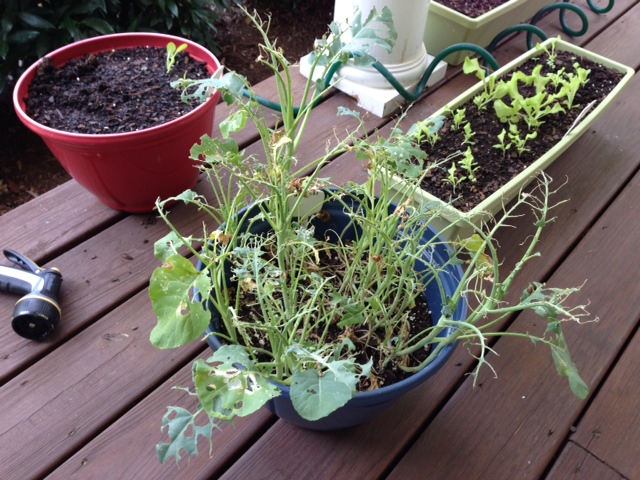
brocThe horror…stupid cabbage worms and yet another species of worm defoliated my broccoli in a day. I bought some Ortho spray (forget the name), but it didn’t seem to slow them down at all.  Oh well, guess it’s part of the learning process. I have to see what kills the damn bugs, that and plant earlier.


On a happier note, the lettuce is going well (see it in the background)  and I should have a good second crop in 2-3 weeks. The trick is to sprout the seeds indoors and transfer to the planter, works great. I have some Jericho lettuce started today using this method, the red pot has two plants that made it but they suffer from near-zero germination in warm weather just like Simpson. It will be interesting to see if it’s any different, the Simpson is sort of delicate and wispy.

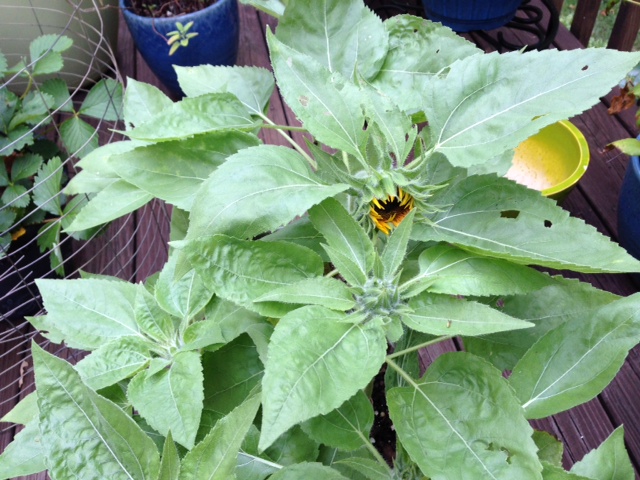
Sun1YAY!! A Sunflower is peeking out! This is part of 20 plants jammed in two planter boxes, the seem to like it OK but don’t get nearly as tall as the ones in the dirt. Which is good, since they’d topple over.  I have high hopes for these, assuming I can keep the 4 legged pests at bay.


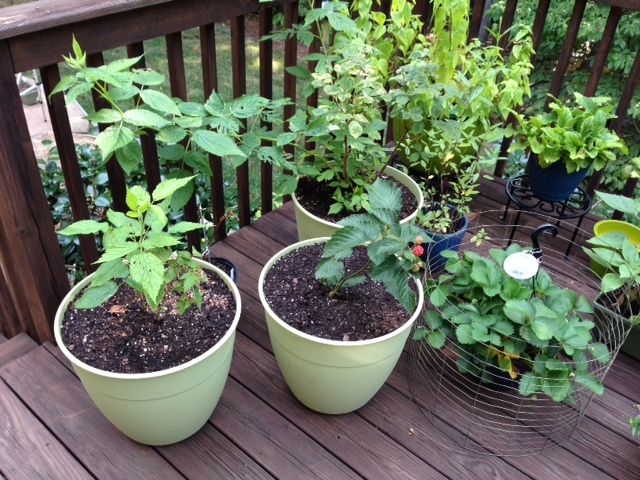
berriesThe berry patch. One Heritage Raspberry, one Black Satin blackberry, and another everbearing that I forget. Looking good, they love being in the big pots and are thriving. Sadly, I bought two each of the latter but the retards at BerriesUnlimited shipped them sideways jammed in a tiny box with only some foam peanuts to cushion the plants. I’m keeping those watered but I think they were killed in transit, one busted off the main cane and the other was shocked by overpruning.  We will see come spring, but I’m deeply skeptical I’ll get plants.

Two more lessons of the mini-garden

Anything in planters needs to be watered 2-3 times a day, and very few things want full sunlight. Bell peppers want to be shaded, they only get an hour or two afternoon sun and they are happy. They were wilting and losing their buds until I moved them on the porch. THis is actually good news, as my property has a lot of shade. 2-3 hours of good light and most things seem to grow just fine, at least here.  


Belated update on the 8 year storage results

I forgot to mention a few things when I posted the first round. In no particular order:

1. Powdered milk in the box = iffy. It looked sort of yellowed and smelled odd, it may have been OK but I’m recommending buying it an a vacuum sealed can. I need to break some of this out (I have that as well) and see if it is usable, I hate to blindly assume it’s OK.

2. Potato flakes in a box = fail. This was a 24 month in my pantry test, I made some up and noticed it was not white and tasted like used gym socks. Same thing as the milk, go with the #10 cans and test every few years. Maybe better at 60F, I dunno.

3. #10 cans= win. Even with a half-assed plastic box wrap in a really humid place, none of the cans showed any rust or degradation. I’ve since sealed the space, and ziplocked/dessicant bagged so I should be good for another 25.