A fast sand water filter

One of the things I definitely needed as part of my big plan was a way to prefilter raw water. In treatment plants, water is pumped into settling tanks with aeration and flocculant to get all the particles out, then it goes to finer filtration and chlorination. In my scheme, I didn’t have anything ahead of my Berkey ceramic filter which would tend to limit the throughput for drinking water (clogs from sediment). It also didn’t allow for a source of filtered but non-potable water for washing.

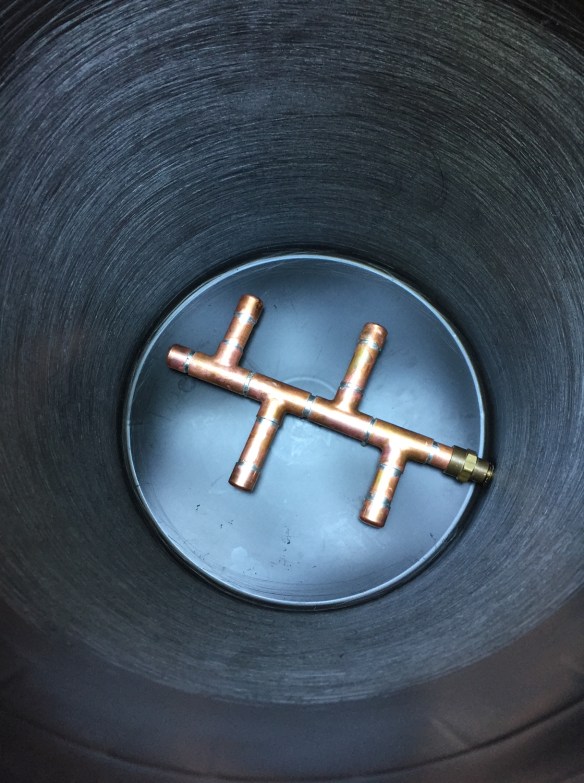
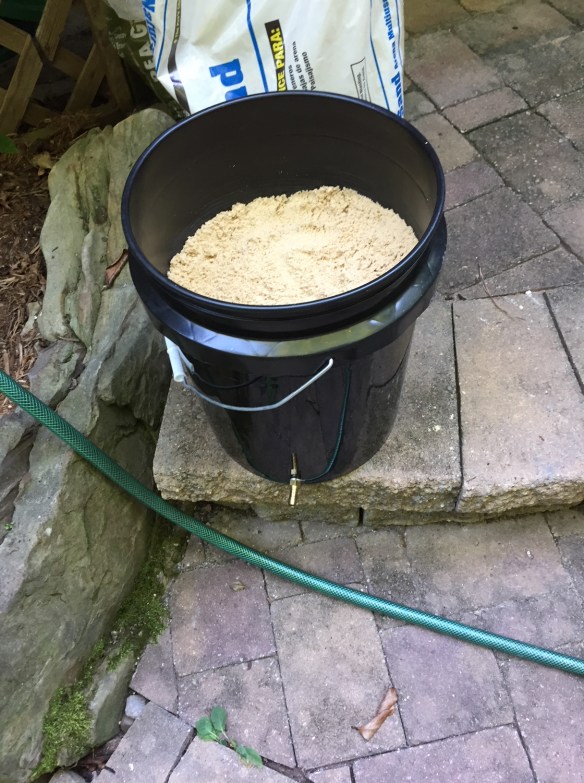
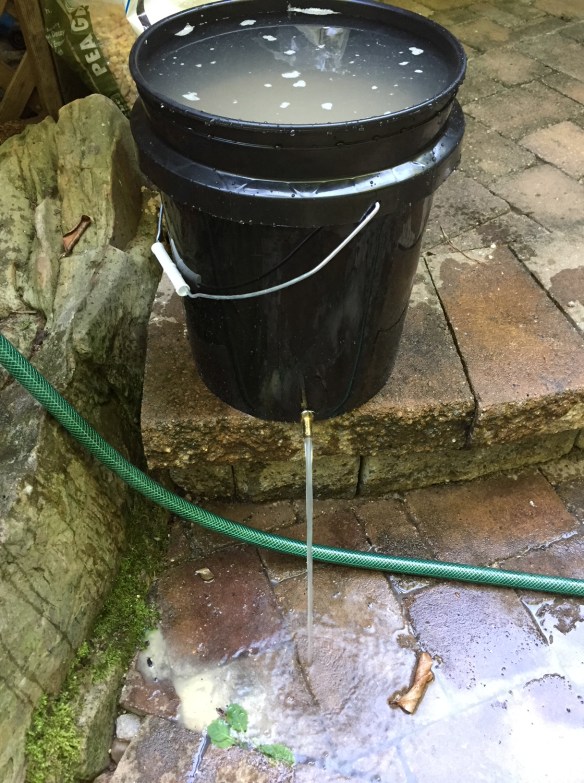
The usual solution for filtering is a “slow sand” filter, it’s a large column of sand with a diffuser on top and a drain at the bottom. It’s big and heavy, they need to be at least 55 gallons to allow the bacteria to trap and digest any harmful impurities. It is also slow, just a trickle, and also needs to be run for a while to develop the native biofilm. Rather than do all this, I made a smaller version that just traps particles. The goal was to pour asswater in the top, and get clean non-turbid stuff out for either bleach treatment (washing) or for the Berkey and Pur filters for drinking and cooking.  Here’s a few pics:

Empty plastic bucket with the copper manifold and outlet

IMG_2402

A couple of notes. I used 40 grit paper on the sides, this is to trap the sand grains and not let any water past the sides. This is a big deal with the slow filters, so I went ahead and treated it. The pipe manifold is copper, there are a bunch of 1/8″ holes underneath that let the water out. I used copper for the antimicrobial properties and easy assembly, but plastic would be fine.  I added a 3″ layer of pea gravel on top of this, to prevent the sand from migrating out the manifold.


IMG_2403

Here it is with the pea gravel and play sand fill. I left about 1 1/2 gallons of headspace to give it some working volume, but still have a filtering action.

IMG_2404

In action. You can see the fine sand it spit out on the first fill, that went away quickly and the rest was crystal clear. Playsand is very fine, almost dust like, and seems to do a good job filtering sediment. I pulled a bucket of pond water, let it sit a few days, then poured it in. Out came nice clear water, albeit with a faint musty lake smell.  This will be run through my other filters soon, and I’ll see how it is. I think using an aquarium bubbler on the filtered water might eliminate the odor, will probably try that as an experiment.

So far, so good though.


Converting the Jetboil to propane cylinders

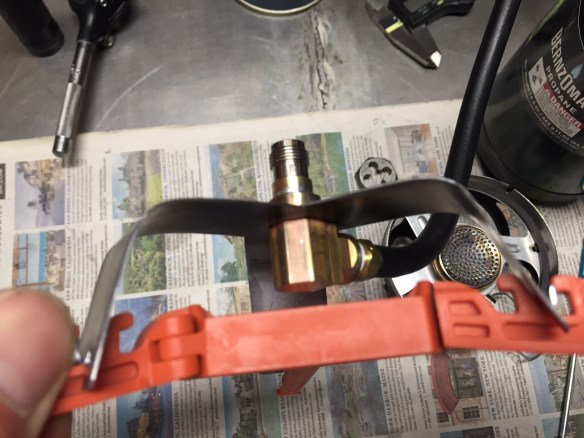
I bought a Jetboil Minimo  to have a compact water boiler, and to work with the freeze dried pouches in case of a short-term event. It’s also handy if we need to evacuate, although I can’t see why we would need to.  The Minimo is a great product, it’s rare for me to find something that isn’t lacking in some way but this is one of them. Zero complaints, but of course I wanted to have the option to run a standard propane cylinder vs the expensive canisters. There are a few adaptors out there, but they don’t work with the Jetboil base and seem dodgy. Web searching turned up the key point that the gas threads are 7/16-28, which is of course not standard. But, a common radio connector IS, so I found one on a old cable. Don’t know the brand, but it’s a TNC female for RG-58 with a crimp sleeve. This fit the gas port PERFECTLY (see below).

I used an 1/8 pin punch to press out the Teflon sleeve, you will need to remove it to have a port for the gas. It presses out from the end opposite the threads. One that’s done, it can be attached directly to a 1/8 ID rubber hose via the handy barb if you can a straight on path.  Since I wanted a low profile, I used an 1/8 NPT F-F right angle fitting, drilled out on one end to accept the TNC. That gets filed to clean the plating off, and soldered in. The right angle is then soldered to a piece of sheet metal, which is artfully bent to fit the plastic base.


sideI used an 1/8 NPT hose barb to fit the hose (more on that later).

Top view

topI used a lathe to turn the TNC body to 0.430, this fit the right angle but it looks like it would fit with a slightly larger drill.
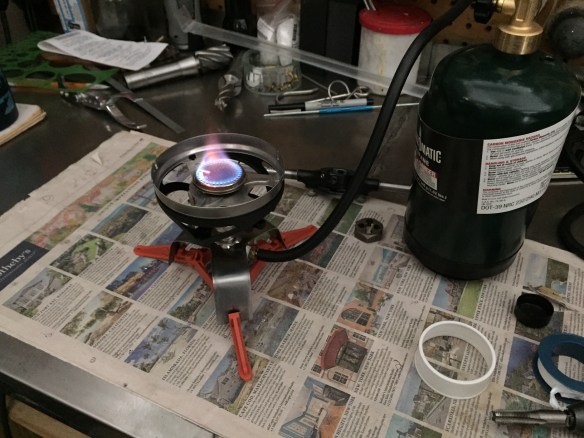
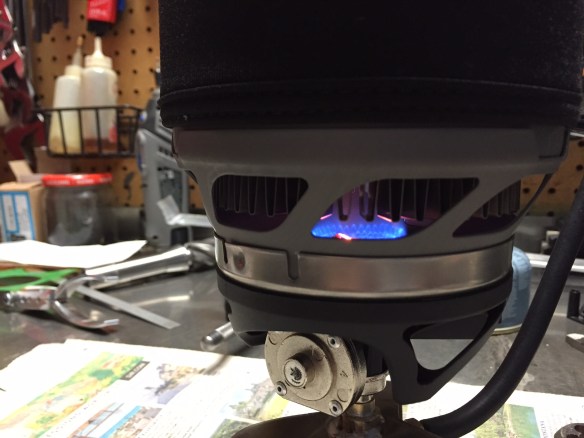
Show time

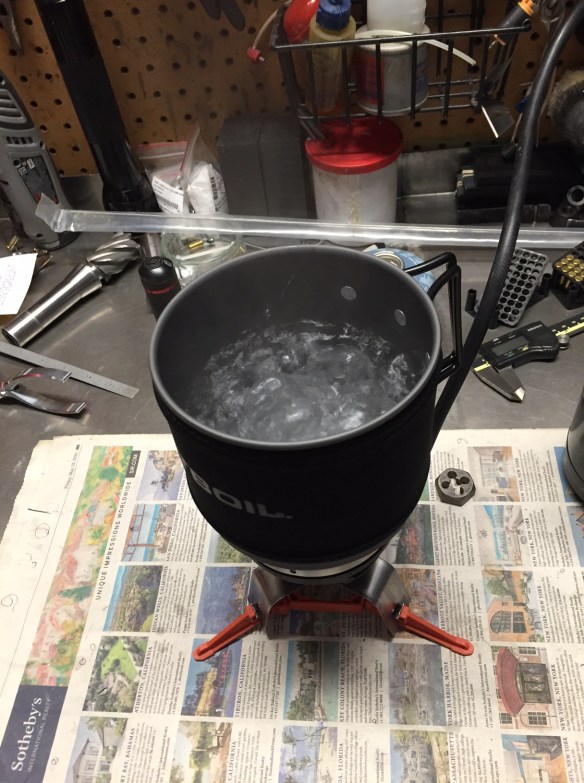
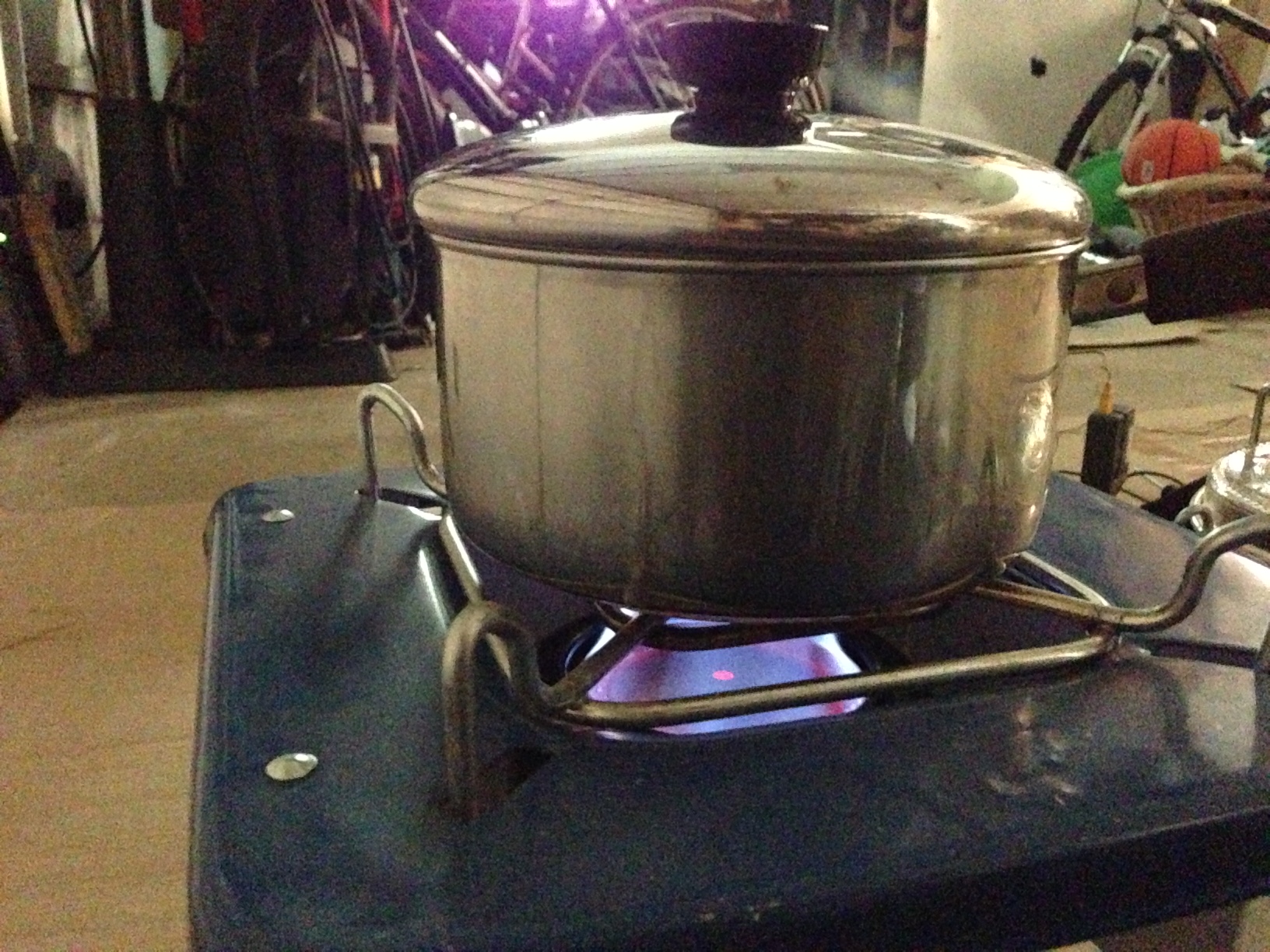
Once I got it all together, I cranked it up and got a gas leak at the barb threads. Added thread tape, and YEAH BABY flame.  Added a pot of water, and noticed it took a while to boil, and had an orange flame at the tip. OK, so maybe a jet change? I turned up to full, and it went “plop” and winked out. No gas flow. I used compressed air and blew the jet out backwards without dismantling it fully, and back in business.  I think there was swarf in the hose, but after this it worked great (stoichiometric flame and rapid heating). No difference between propane and the butane/propane mix, at room temp. In base camp Everest, probably not the case but that’s not a concern for me.

First test (with swarf). You can see the Bernzomatic extension hose…

setup

Second test (swarf removed)

blueflame

Houston, we have a go for boil

boil

The hose is a Bernzomatic extension kit, it’s 14 bucks at Home Depot and was exactly what I needed for this. Just whack the hose at the point you want, and attach to the barb. Saved me a ton of effort fabbing a custom part from a hand torch.

You may notice 22 LR reloading stuff in the pic, that’s a whole ‘nother topic.  Basically I’m trying to make a custom quiet pest round, using unfired Aguila Colibri brass and loading shotgun powder. I either get a *%$@# cannon blast noise or a pathetic droopy trajectory.  Yes, I have tried ALL the available subsonics and they are either way too loud or Airsoft realm.  I’ll figure it out, eventually.  Will involve Red Dot or Blue dot powder….


Impeller pressed sunflower oil, DIY

Background

With the recent cold and rainy weather, I finally had time to try out making my own sunflower oil. Using the press I built (see the older post on sorghum syrup), I followed the instructions on this site:  http://journeytoforever.org/biofuel_library/oilpress.html

I used oilseed purchased on Amazon, spendy but I got a load of seed for experiments and for fridge saving over a few years. There’s enough to sow a large plot with enough plants to generate a years supply of oil. My biggest issue was pests, mostly finches but also deer and squirrels. Once you have a large enough plot, there’s not enough pests to get the whole thing, assuming you put up a fence to keep the 4-legged critters out. Birds will eat as much immature seed as they possibly can, they are voracious pests so plan on loss unless you can add plastic mesh overhead.

The process

Starting with cleaned black oilseed, use a kitchen blender to shred the whole seeds until it turns into coarse flour. You can only do about a half quart at a time, once the flour forms the whole seeds stop getting to the blade.  Heat the flour up in the oven until it gets to about 150 F, this allows the oil to become less viscous and flow out of the slug inside the press. Don’t be afraid of overheating it, it cools down quickly and you really need a hot press to get the oil out. It will help to preheat the press itself, it will keep the slug warm. You will also want to add heat to the press with a heat gun, to keep it from cooling off.

Load the press full, then compress it by hand to pack as much in as you can. The sleeve will compress 3-4 times in volume, so expect that. You will also need a very large force, I used a 2 ton hydraulic press for the pressure. This was just adequate, the press was binding and at the limit of what I felt comfortable with. Still, it worked very well but could use refinement.

Towards the end of the pressing

I initially got nothing out of the slug, I was thinking “this is a bust” but it finally began flowing out the ports. It took a while, applying heat, cranking the press, and letting it rest. It eventually compacted to an end stage where no additional oil flowed, that’s time to collect and filter the oil.

IMG_1869

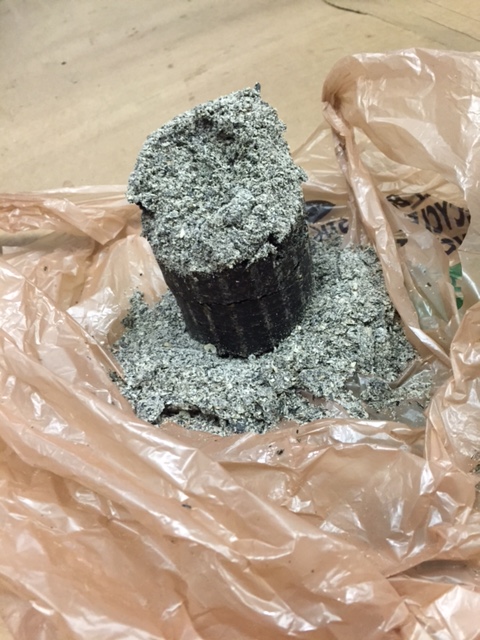
The spent slug (turd to some LOL)

Looks like wood ash, but it’s just the flour. It is as hard as a rock, and requires a large screwdriver and mallet to break free from the press sleeve. Lots of people complain about this, the little screw presses are really tough to clean from what I hear. I’m also not sure they generate enough force to clear all the oil from the “cake”.

IMG_1871

Collecting and filtering

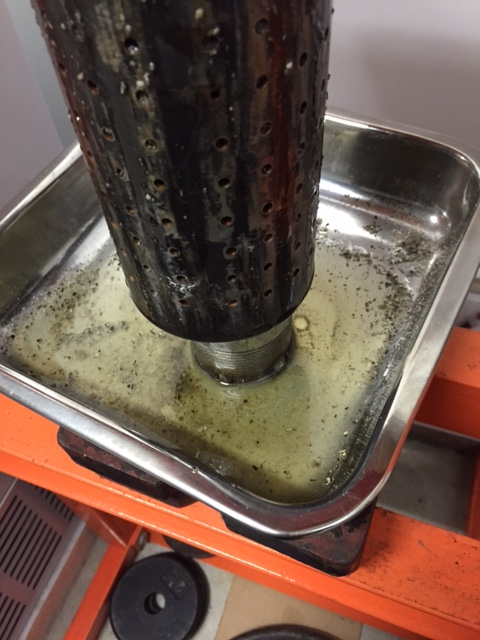
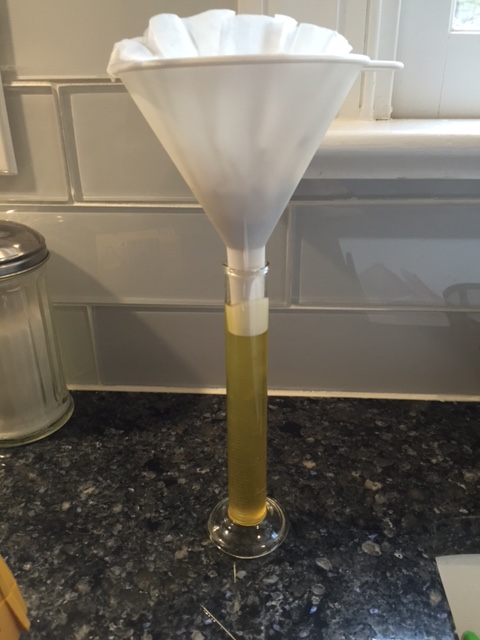
I heated the pan, and poured the hot oil into a coffee filter lined funnel on top of a 25 mL graduated cylinder. I wanted to accurately measure the yield, and I got just about 50 mL from a quart of loose seed (not flour). This seems to be about the right yield, looking at reference site’s numbers. It looks great, nice and clear but took overnight to clear the last of the oil through the paper filter. Coffee filter are around 15 microns, this is too small for a gravity filter and especially oil. I will get a 25 micron mesh and see how that goes, I don’t recommend paper for an oil filter unless you pressurize. Next steps are to fry some stuff in the oil, it’s in the fridge waiting for the test. Supposedly oil will turn rancid quickly at room temps, so I’m being cautious.

IMG_1872


Geiger counters and Black Swan events

Now that I have a lot of my mid term plans and supplies done, I’m looking at long term, mobile operations, and “second-order/Black Swan” scenarios.  By that I mean things that can happen, but are not as likely and not worthy of attention until everything else is done.   One of these is a nuclear exchange or a long term loss of grid power (nuclear fuel fires). For that, I still need everything I already talked about but also a way to detect gamma/beta radiation and some type of fallout shelter.

Detectors

There are three types of radiation detectors on the market; new lab grade survey meters, low cost Geiger counters, and government surplus. The problem with the first is expense, to cover the range expected in a crisis would take thousands of dollars. You can’t get a decent instrument that will cover 1 mR to 500 R/hr, the closest I found was Ludlum’s in Texas but they are not really customer focused and you’d need add ons to get the range. Plus it’s expensive.

Amazon/Ebay stuff is usually gimmicky/low cost with a low max rate, usually less than 0.1 R/hr which is OK for things like high school science lab but not for even low levels of fallout. You have no way to know whether or not you’re getting 1 R/hr or a 1000, which is the difference between living and dying.

And then there’s CD surplus. It seems there are large stocks of 60s/70s Civil Defense meters being released into the surplus channels, so one can pick up bargains. BUT, these things have been sitting around for 50+ years with a lot of it inoperable. I was lucky to find this guy:

http://www.uraniumrocks.com/

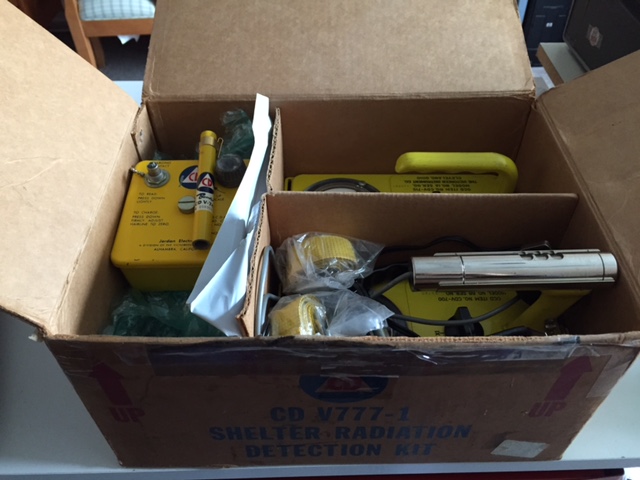
He has repaired and checked CD-700/715 meters and dosimeters, plus I scored a complete NOS shelter kit:

IMG_1396This covers all bases, from low level to lethally hot AND has the dosimeters. Price was right, too. You need a check source, you can use uranium ore or Peerless lantern mantles which are commonly available.


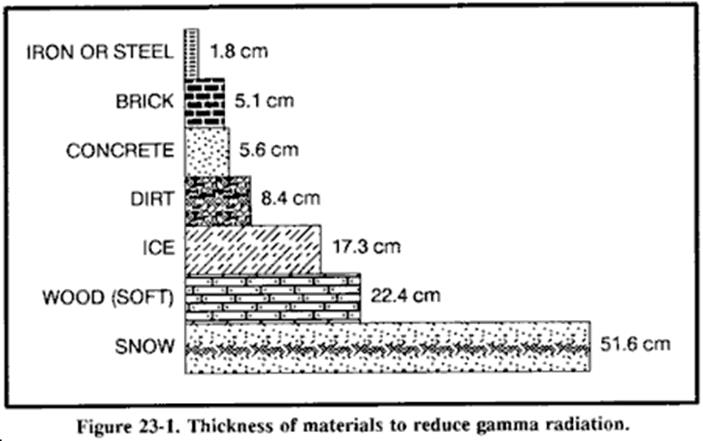
OK so what about shelter? Well, that’s one of those things that people just love to debate and go for the overkill solution. Most hard core peppers end up building versions that will ride out a near-miss from a surface burst. Unless you are within 75 miles of a hard target and expect a full up exchange, I’m not sure this is appropriate. Fallout tends to disperse in high concentrations close to the source, and decays exponentially with time. Most people can get by with less protection. The rough rule for exposure is keep the dosage to less than 125 rads in a month,  and it’s probably going to be less than 100 rads/hr for the initial rates. Doing some rough calculations says you need to reduce that by a factor of 16 to keep from getting ill.  That takes 4 half thicknesses of shielding (2^4=16), which can be obtained by about a foot of earth or 10 inches of brick or cement. A typical frame house will give roughly one half thickness, if you shelter in the innermost lower part OR the basement/crawl.

HVLYou need three additional half layers, the old CD books say pile up dirt but that’s impractical. My solution is: Sandbags. I have an 8″ brick walled above ground basement , so I only to add bags above to get the protection from the fallout coming from tree foliage and the roof.  When I first started thinking about this, I was focused on digging something but then realized that wasn’t practical. Not only would people think I’d totally lost it, but it’s not needed and would be a PITA to keep free of water, ventilate, and would be claustrophobia inducing to boot. Not to mention a tough thing to remove if I move.  Polypropylene bags come in white, OD, and beige and are 37 cents a pop in lots of 100. They store small, can be filled when needed, carried, and can be used to create a defensive fire position if that’s ever needed. I want the stuff I buy to serve multiple purposes, which these do.


Midrange planning and supplies update

I am finally getting caught up on the midrange planning and supply situation, that had been languishing due to work demands and other things. As you recall I had gone through the old stocks from 2005/6, and pitched anything that was not a classic “dry goods” item or known to have a very long shelf life. I focused on basic staples like flour, corn meal, salt, spices and extracts, oil, sugar, etc. I determined that these all keep fairly well if kept in Ziploc bags and plastic tubs, and at a reasonable temp. 5-6 years is about it, most of it passed the smell test but the cost just isn’t a factor. I filled a grocery cart for $220, if you had to do it from scratch (I had a few things on hand) maybe $300. I’m pleasantly surprised by the total volume of the supplies, they fit in a fairly small area and will last about 3 months or more depending on how lean I can go. The day to day stuff I have on hand (non-prep)  will last at least a month, then there’s a month or two of freeze dried. I’ll add a month of MREs, and the long-term grains which will put it past 6 months easy.

I’m looking around at it, and thinking how tough it would be to store a year’s worth. You could, but it gets expensive and takes up a lot of room. My idea is to have enough on hand to weather any immediate emergency, then start growing things if the situation seems like it will go longer than a few months.  6 months allows me time to get past winter and get plants going. Yeah it’d be nice to have more but I’m just not doing that.

Cookin’ with gas….

Finally got around to testing out my heating and cooking gear. 

burnerThis is a Harbor Freight single propane burner, it’s the shizz. Nicely made, perfect flame etc. I used this one long ago to make coffee, but on a 12 oz bottle versus the 15 lb cylinder. The hose to the right I got at Home Depot, it has a regulator with the gas flare fitting. Gotta have that…

This is the main cooking surface, you can get fancy and go two burner but I’m not Paula Deen. It will also kick out a fair amount of heat if it gets chilly or you are too lazy or cheap to buy a Heater Buddy.

This is the oven.

oven

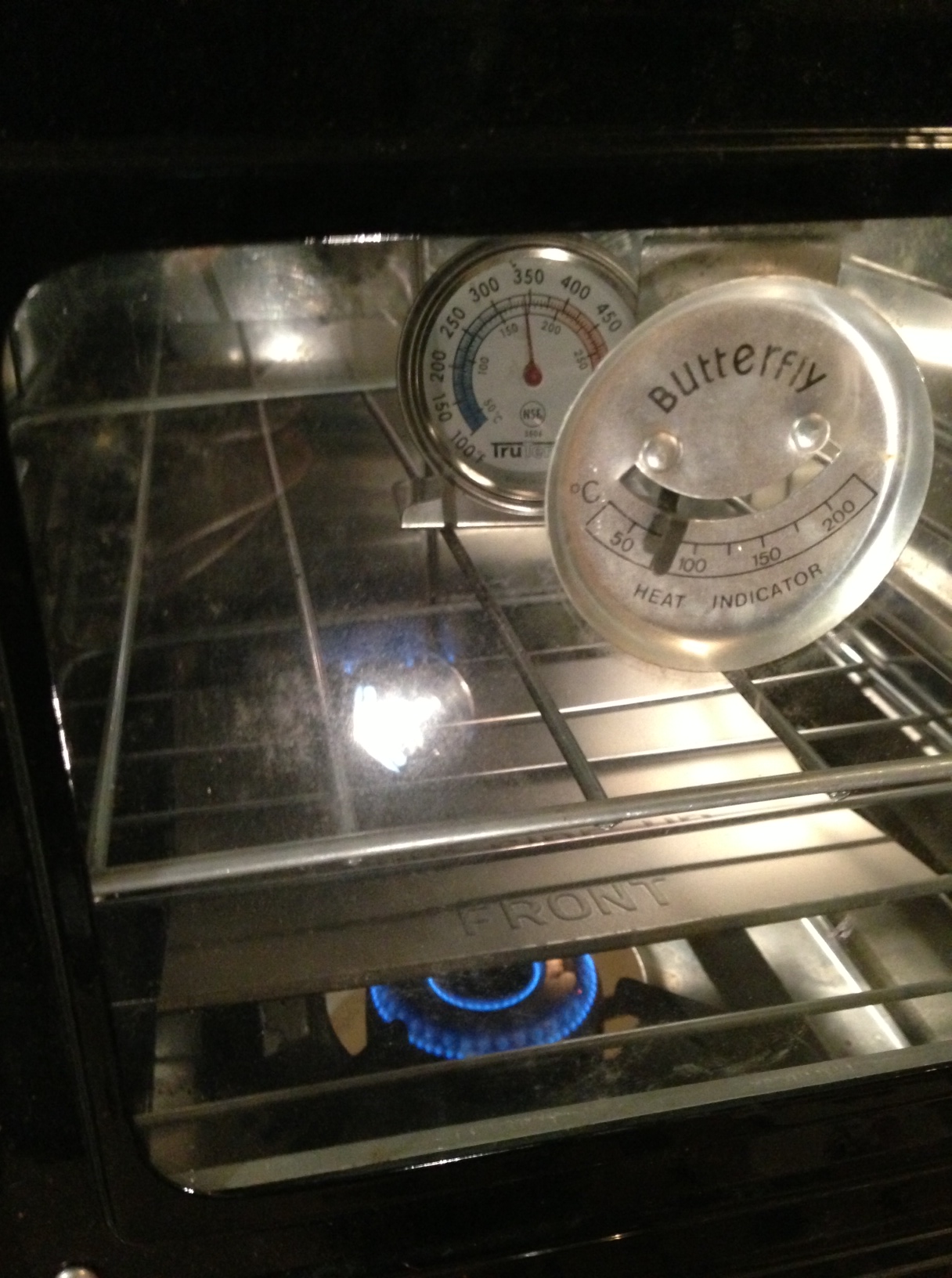
I got it at St.Pauls Mercantile, along with other cool third-world stuff. This little oven is so awesome, it got to 500 degrees before I realized it and will run at 325 at the very lowest stove simmer setting. Note the oven sits on top the HF burner, it’s not one piece. It’s 10×11″x13″ internally, and will hold quite a bit if you get pans that fit. Normal loaf pans may be too big to put 4 in at once, so you have to make sure to measure them before buying. Same thing with cookie sheets.

Shot of the internal temp and burner, the front thermometer is for amusement only.

temp

The Butterfly Kerosene stove

flame2

Also available at St. Pauls, so cool! You fill the tank with K1 (diesel would probably work in a bind), let the wick soak, and light it off. It burned a lot cleaner than the heaters I’ve owned, nice blue flame with no yellow tail. As with the oven, will put out a ton of heat and will get a pot roiling quickly at full tilt. You can adjust the flame a lot, and use it as a heater. The beauty of this is the fuel, 5 gallons of K1 will go a long way so pound for pound this is the way to fly. It does smell, and will smoke like a bitch when you fire it up and shut it off due to the way the chimney heats up and cools off. All kero burners do that, so nothing new there. What impressed me was the simplicity of the design and how well it worked, there’s something to be said for one moving part. One caveat: the burner ring has to be level or the flame will not be equal nor will it get very hot:

flame1

Notice how I cleverly ignored the big font in the instructions about making sure it’s level. I though it was referring the tank, but it’s the burner. The liquid K1 needs to fill the wick evenly, if it’s slightly off kilter the wick will run dry on one side and then not make enough heat to vaporize the fuel.

Heater Buddy

heaterAnother cool item, it’s a small ceramic element heater that can run from a 12 oz bottle or a tank. This is a non-regulated adaptor hose, it has a male bottle thread on the heater end.  Small, efficient, and flexible. Even has a pilot light.

All in all a very satisfying afternoon, things actually worked as expected and I have “Operation Eagle Toast” behind me.

Mid-term emergency planning

We’ve discussed short term planning and prep in a previous post, the next phase begins roughly 20-30 days after the event and lasts until you can achieve sustainability. Recall that the short-term will be covered by a relatively moderate amount of preparation and supplies, augmented by whatever you have on hand or can grab prior to the depletion of local stores. That will represent the last link to normal and familiar existence, after that runs out you will need to shift to a much more labor intensive routine. Most of us take advantage of prepared foods and many modern conveniences, none of which will exist. There are a number of categories to consider:

  • Heating
  • Power
  • Cooking
  • Water
  • Food
  • Sanitation
  • Self-defense
  • Shelter
  • Fuel
  • Transportation
  • Human interaction

It’s sort of a “OK I made it this far, now what?” scenario.  Up to that point, chances are it will seem like a camping trip or the aftermath of a hurricane; not a lot of work just consuming supplies. The next phase will need to last long enough to get things ramped up to allow existing on what you can grow and collect in and around your dwelling.  That’s the Day366 idea, maybe it’s Day183 but same principal. At some point, no matter how much stuff you hoard you will run out. That will be primarily food related items, the rest is less critical and beyond the scope of this blog. To a large extent, other things will become available as people move on (both figuratively and literally). For instance, say 5 months later you need some nails. The local Home Depot will probably have lots of them, you can’t eat nails and they are useless to looters.

I’m going to cover the last item of my list first, Human Interaction. This might be the most important one, since your survival could depend on who shows up at your place.

Human Interactions

There’s a new movie out called “American Blackout”, I don’t plan on watching it but the plot revolves around a cyber-attack on the power grid. It covers the first 10 days, but I’m not sure if it assumes the blackout lasts longer than that. This made me think (again) about how people would respond in a crisis, and how my planning would be affected.  Frankly, I have a very tough time imagining what others will do. We all tend to assume people will behave in a certain fashion, either like us, helpless incompetents, or as criminals.  That’s the sense I get visiting prep sites, maybe that’s correct but no idea, really. I’m going to try to be open-minded and think this one through.

Neighbors

These folks are, by virtue of proximity and familiarity, going to be the first to come a ‘knocking.  I expect them to be out and about and seeking help and information from the start of the crisis, it’s only natural but begs the question of how to respond.  On one hand, if outsiders cause trouble you may want to band together for protection. On the other, chances are they will only drain what limited resources you have and expect you to help even if you can’t. My position is to offer guidance, information (you may be the only link to the outside), and assistance defending against outsiders.  Say nothing about what you have, that will create a terrible problem later. I’d like to be able to function as Farmer Bob and feed the subdivision, but that’s not practical. So, the only reasonable path is to defer food requests and make them find it themselves. I could probably provide clean drinking water, assuming they bring it to me for filtering and treatment. I could also give them a few seeds, if they can plant and maintain a garden.  You have to force people to shift for themselves, otherwise they will do nothing and expect to be taken care of. Sound harsh, but there’s no other way to handle it.  It’s the old saying about teaching someone to fish rather than giving them one…

The exception to this is block defense, if strangers begin roaming and looting houses you may need to form a team to repel them. I suppose it would be like a tiny version of the Minutemen, those who own firearms respond to the call. That assumes your neighbors are not royally pissed off at you and/or are the ones doing the looting.

What I’d really like to do is organize the nearby homes, pool resources, and get cranking on the gardening/farming/wood cutting/improvising.  Whether or not I can convince people to follow that is a big question, but they’d have few options.   Beats me if this is feasible, or it breaks down and we end up in Mad Max mode after all.

Outsiders

This is the land of pure speculation. I’m not sure if too many outsiders would show up, given the difficulty of travel and resupply. If they did, I would stay quiet and wait until they left. If they caused trouble, warn then dispatch. I don’t see how you could tolerate any form of looting, that defeats the whole purpose of prepping and would cause you to lose everything you worked so hard to put in place.  ‘Nuff said there.  One complication would be cops and armed forces, if they started commandeering private property under some bullshit law it would put you in a real bind. I could just see the local doughnut eaters trying this, although I doubt it would be successful. If the armed forces do it, maybe better equipped but still facing resistance from heavily armed homeowners. Same approach, hide then attack if they persist.

Food

Learning from my storage experiments, here’s what I recommend as the food options:

  1. Freeze dried entrees, veggies, fruits. This stuff is reasonably priced, stores for up to 25 years, and has enough variety to prevent food monotony. How much is up to you, but I suggest at a minimum three meals a day per person for 3 months. This, added to the short term stock plus things I list later, should get you to the 6 month or beyond mark. http://www.beprepared.com is a good source of these items, I’ve been very happy with them.
  2. Freeze dried basics. You will want to augment the entrees with some staples, like potatoes, soy protein meat substitutes, powdered eggs, powdered milk/butter/sour cream/tomato paste, etc. These allow you add in simple sides and also make things like pasta sauce from long term stores. This will stretch out your entrée selection and use things like rice, beans, and pasta in normal dishes rather than prison camp fare.  What’s for breakfast? Beans. Lunch? Beans. Dinner? Get ready….RICE! Yay!  Need to avoid that trap. http://www.rainydayfoods.com/ is a good source for all this.
  3. Grocery Store items. You don’t need to buy everything in sealed cans, here’s a sample of what can be safely stored in Ziplock bags and boxes:
    1. Pasta.
    2. Rice
    3. Baking powder
    4. Yeast
    5. Salt
    6. Sugar
    7. Spices
    8. Cocoa
    9. Dry soup mix
    10. Potato flakes
    11. Canned meat. Note: this needs to be stored separately, rotated and checked. The cans do corrode and the result is a disaster.
  4. Grains and legumes. Sold as a kit by BePrepared, contains a years supply of misc grains. Highly recommended, but note requires a grain mill for the wheat and oats.
  5. Oils. I’m still working on this, but so far the leading candidate is coconut oil. It’s almost fully saturated, is a solid below 75 F, and is said to keep for 6+ years if kept cool, dark, and unopened.  Plain corn oil is OK if you check it, but this is a work in progress.  BTW you MUST have some kind of fats and oils in your diet, plan on looking like the Olsen twins without it.
  6. Powdered drink mix, coffee.  This falls under the monotony rule, it is said that drinking just plain water leads to dehydration, esp. with kids.  Packets and jars of Koolaid and chocolate milk store well and are easy to make.

Heating and Cooking

Really the same thing, you probably will be using the same item as a heat source and for cooking. The best approach is a propane burner, this can be run indoors with no smoke. Downside is the need to stockpile gas, but some quick ciphering leads you to about 8-10 15 lb cylinders as a minimum. That’s not bad at all, and highly recommended. Using a Coleman camp oven on top the burner gives you a small volume stove.

Alternately, you can purchase a cheap wood stove and pop for the Lehman’s Amish oven. This is a lot more hassle, you have to run a chimney, cut and season wood, and will create a giant signal that says “go here to pillage”.  It’s totally non-stealthy, and really belongs in the Day366 section but thought I’d mention it.

Stay tuned for more when I get motivated to finish this post….

Realistic preparedness plans, some guidelines and specific information

So after all the introduction and argle bargle, here’s the start of the relevant material. I’m writing this for the person who may not know much about the subject, may be they are interested but not sure where to start or even if it’s practical. If you are already deeply involved with it, it may be of limited usefulness but might expose some gaps in your own plans.

How to begin

I recommend starting small, with a specific length of “off grid” time in mind. This is the whole idea of prepping (I hate that word but it’s terse), if something happens how can you and your loved ones survive if not be comfortable. When I started, I picked the following goals:

  •  30 days
  • 3 months
  • 6 months
  • One year

I have since added “indefinitely” to the list, it’s the Day366 thing but a much more intense and long-term exercise. It may be good to add two weeks on the front, this is a more realistic time frame for common emergencies and doesn’t require the same level of effort and expense.  Let’s walk though that first….

TWO WEEKS

We will assume a standard scenario for most of the timelines, i.e. you’ve lost electrical power, utilities, access to most if not all outside facilities. This one doesn’t include any self-defense, as 2 weeks will likely not lead to unrest.

Water

You will need one gallon per person per day, so 14 gallons each.  Family of four, just under 60 gallons. Distilled water is a buck a gallon, cheap and keeps a long time. Buy these 4 at a time, and cache them in a cool place. You can stack 3×3 or 4×4 in a small area, 4-5 high on plywood and bricks so there’s 36-125 gallons. This one is non-negotiable, you can exist without a lot of things but water ain’t one of them.  Notice I’m not recommending a purifier, too expensive and a hassle to dick with collection. You can supplement your cache with the hot water and toilet tanks, they contain clean water but will probably have some sediment. Use that for washing or a reserve. The hot water tank will have a drain at the bottom, just open the valve and gravity will force it out. Toilet tank (not the bowl!) is accessed by lifting off the lid, dip it out.

Food

I recently read the average family has just two days of food on hand. Judging by the duct cleaning young-uns comments on our modest pantry, I’d say that’s about right. My parents went through the Depression, and always had plenty on had. They weren’t hoarders, just of a different time when food wasn’t readily available. You will need 3 square meals a day, per person, plus snacks. This food will not be low-cal. It needs to have lots of calories and protein, and be tasty so everyone feels like eating. No one wants crap food in a highly stressed environment, just ask combat vets.

Speaking of vets, one very easy way to meet this need is to buy MREs. Uncle Sammy spent a lot of money and time on these, and they are the shit in an emergency. I’ve eaten  aircrew versions, they were pre-MRE but had lots of the same stuff. They were great, I’m not a food snob and think people like to bitch about the grub no matter what.  If you are wise, just buy MREs from a reputable supply house and you are done. Kinda spendy but if you store them in a cool area they last 8-12+ years. They are also a building block of the longer term plans, those incorporate MREs as variety to the stored food and grains. And, you can get the chemical heaters that make the entrees hot without flame. VERY HARD TO BEAT.

Other food options

If MREs just can’t be had, be prepared to spend a lot of time and space on the alternative, plus rotating stock to avoid spoilage. And, you will need ways to prepare said food. Keep this in mind, the last thing you want is to have to run an oven all day to eat. Everyone is different, but here’s some ideas of what and what not to buy:

Yes

  • Peanut butter
  • Pilot crackers
  • Jelly
  • Canned meats
  • Chili
  • Cereal, esp granola
  • Mac n cheese (the fattening, in a cup kind). Requires boiling water but not pots full.
  • Ramen noodles
  • Any “add boiling” water foods, including freeze dried. Those really belong in the longer-term category but will work fine.
  • Instant drink mix
  • Powdered milk.

No

  • Canned soup. Salty and heavy as hell, needs a stove, and no nutritional value.
  • Pasta, flour, cake mix, or anything needing cooking.

So if you want to be cheap, eating will not be much fun. Kinda like real life.

Cooking

Notice how you needed boiling water for most foods? You might also need it for other things, like coffee and tea or to sterilize water. A heat source is needed, here’s some options:

  • Jet Boil. This company makes climbing stoves, these have an insulated chimney that can boils 16 ounces of water in a minute. Pretty much the bomb for freeze dried grub and hot water. Uses little cans of butane, very light and portable. Spendy but like MREs, hard to top.
  • Harbor Freight or Coleman burner. A single gas burner, runs on small propane bottles. Less than Jet Boil, heavier and bigger, sprays BTUs everywhere. Can double as a small furnace, which is tres handy.
  • Kindling burner. A glorified camp fire in a can, uses wood so fuel isn’t a problem. Outdoors only, not really recommended.

Heat

Heat Buddy. Runs on the same small propane bottles as the stoves, will keep you from freezing. Anything else is seriously not recommended, for the price this is the way to go.

Fuel

Either cases of the small propane bottles, or 1-2 cylinders. The bottles are a whole lot less to carry, and don’t need complex adapters and hoses. Get enough to last the whole time, both cooking and heating. You can follow the consumption rates listed in the instructions to add up the amount needed.

Light

You don’t need to go nuts with this, although I have found just a flashlight really blows for illumination.  Coleman and others make nice dual fluorescent lanterns, they take a wad of D-cells and can be run off 12 volts. I’d consider that a minimum, along with a few LED flashlights. Stepping up from here is a regular lamp, using CFLs. They use 7-8 watts, but need an inverter and battery bank. This option feels more normal, you can read and do regular activities with that much light.

Power

A couple of options here:

  • Dry cells. This assumes you run everything from AAA-D cells. Not a bad choice, just make sure you buy lots of name brand cells and keep them current.  You are limited to lanterns and portables.
  • Deep cycle or SLA battery with an inverter. Ahh, now we are talking.  Costs a lot more, but can be set up to run larger loads like a lamp or laptop. I won’t digress on the details, but expect to spend 300 bucks for a decent setup. More than that for a small solar array to charge it. This may not be practical for the 2 week’er, but electricity is sooooo nice.

Sanitation

You will need the following:

  • Toilet paper
  • Paper towels
  • Plastic ware, cups
  • Soap. Good old Ivory bars, nothing fancy
  • Two buckets. One to wash up, one to..you  know.
  • HD trash bags
  • Feminine hygiene accoutrements
  • Disposable razors
  • Travel shampoos
  • Kleenex

OK, I think that’s everything. If you have everything on the list, you are good to go for the duration barring any medical crisis.