Deflating the Rational Man theory; how likely are man-made crises?


I mentioned the Rational Man theory long ago, this is the idea that a person (or a leader of a country) will always act in a rational manner and to maximize their own safety and self-interests.  Preparing for a crisis/emergency usually involves assessing the relative likelihood of that event occurring, so we need to know that. There a number of potential crises that hinge upon the actions of leaders, such as EMP attacks, limited war, bioweapons, state sponsored terrorism.  Most people discount the probability of these because there’s no real point to the action. We know the attacker will almost surely suffer far greater losses than the victim, and will probably cease to exist in the aftermath.

However, history is full of what seem now to be senseless acts, mostly carried out by dictatorships or police states. A partial list:

  •  The invasion of Kuwait
  • The invasion of South Korea
  • The attack on Pearl Harbor/invasion of Russia

Knowing these have actually happened (and in recent memory) would tend to make one skeptical of the “it can’t happen” mindset. I tend to lapse into complacency, but I am reminded by current events how things could unravel if the Rational Man fails.  Here’s a few potential scenarios to contemplate:

Russia’s ambition leads to war

The current administration’s total lack of response to Putin’s land grabs lead to an attack on one of the Baltic states, or the western Ukraine, by Russian forces.  NATO and/or the US gets backed into a corner and launches an attack on those forces. Neither side is willing to suffer a defeat, and the fighting slowly escalates until the stakes are so high as to rationalize the use of battlefield or even strategic nuclear weapons.  Where it stops, who knows.

North Korea

Kim Jong Un uses a WMD to attack the US, or another putative US ally. The US retaliates and kicks off Korean War 2, and God knows what else. China is a wild card here, just as in the first war.

China

A territorial dispute or international incident at sea leads to a clash between US and Chinese armed forces.  Local Chinese commanders ignore Beijing and escalate. The risk here is not the normal deliberate civilian leadership, but the Chinese military. They are believed to be aggressive and spoiling for a fight. Taiwan is another flash point, the day may come where China believes the risk of US involvement is low and decides to take Taiwan by force. Where this leads is totally unknown, but will not be good.

Iran

Similar to North Korea, but probably less likely to commit an overt kamikaze run by directly attacking the US. However, once they cross the nuclear threshold expect an eventual Iranian proxy attack (by some splinter group) or a preemptive strike by Saudi Arabia/UAE/Israel to prevent it.  Again, where it ends up is unknown.  It’s VERY difficult to imagine Iran not wanting to strike a blow against the Great or Lessor Satans, once they have a viable weapon.

ISIS/Al Quaida/Boko Haram/Your extremist group name here

Nuclear device detonates in large city, WMD attack, power grid shutdown, etc.

I’m looking around and thinking how dangerously unstable the world seems lately, so many flash points and a big power vacuum left over from our exit from foreign affairs.  As many astute people have pointed out, it can lead to a war by miscalculation, since the aggressor is led to believe there will be no response to the offensive act.  This is usually true to a point, but invariably the US reacts and squashes said aggressor.  Many billions of dollars and thousands of lives are lost each time, but no one never learns.  So I suppose it’s prudent to plan for something like this, at least in part.
EMP, blackouts, and traffic jams

Someone I know recently asked me about EMP-proofing a vehicle, and the first question I had was “where are you planning on going after an EMP event, exactly?”  I always assumed that vehicles were going to be worthless in any sort of crisis, but it made me think in more detail about why.

Let’s assume, for argument’s sake, that just the power grid in a region goes down during the day (no other EMP effects).   What is the reaction to that? Well,  we know all traffic signals will be off, and the existing traffic will be forced to follow the 4-stop rule. People don’t seem to comprehend this (when’s the last time you saw a 4 way stop?), so most if not all intersections will become bottlenecked or gridlocked.  And that’s just the people already on the road. If it’s between 7 AM and 7 PM, those at work will get in their cars and leave, causing total mayhem on the surface streets and feeders. Major highways will not be able to offload the traffic due to blocked side streets, and ramps will back up. Interstates in rural areas will probably continue to flow, until the first vehicles run out of gas and start blocking lanes. If traffic is stopped for long periods, anywhere, some will run out of gas and will block the lanes, causing more delays and potentially a locked up road.  Remember, we are talking about ALL power being off in a wide area, with no easy way to pump or transport fuel.  Things may take a very long time to sort out, if they do at all.  I believe a person in a city has a very short time to take action and get on a major roadway before being caught in a jam, anywhere from a few minutes to 15 or so at most. On the freeway, things will take longer to slow down but figure on a 10-15 minute window to reach the outer parts of the city then a few hours to reach the next major metro area or a roadblock.

On the other hand, if it occurs late at night/early AM, things are a bit better and you may not have an immediate jam up although travel will probably be slow due to the lack of signals. But, if this was a deliberate act it’s unlikely to occur at night (maximize the damage).

We can also assume the authorities will ban non-emergency travel in the immediate aftermath, to preserve any hope of keeping military and police transportation operating.  You can count on the police and FEMA being in total full bore crisis mode, and they will likely initiate a curfew as well as some sort of local roadblocks to keep people contained.  So your travel is soon going to be limited no matter how you slice it.

As a side note, all this assumes no vehicles are being affected by EMP, and it was just a power blackout. If even single digit percentages are disabled, they will probably immediately block all the roads even if if not many people are out and about. People generally don’t skillfully head for the shoulder when the engine dies, on the remaining inertia. They coast to a halt right there, seen it many, many times.

Hence, my discounting any value in having a vehicle after the fact. It may be useful long after the crisis has passed, but to run post-EMP errands, no.  Travel will need to be by foot or bike, and my plan is to take the railroad tracks home if I’m at work.  Nice clear path, no panicky jackasses harassing me.  I can make it in home in about an hour and a half, I should be fine but things will get real interesting after that.   I really don’t think the EMP thing has a high probability of occurring, but it’s educational to think about what would happen if it did.  Sure hope I’m not on far away vacation, because getting home is going to be damn near impossible.


Gardening and self-sufficiency in a crisis, looking back

The reason for my garden was to see how growing my own stuff would actually work, versus just tossing some seeds in a can and hoping it would suffice later. Overall, things have worked out very well and I’ve learned A LOT about what grows best and how to keep everything alive. I need to record the yields of everything vs the square footage required in order to get an idea of how much seed, soil, and area is needed per person to survive. I also wanted to see which crops were the most efficient in terms of nutrition vs space vs work required.  

My conclusions so far:

  • Sunflowers are fab. They grow with minimal care, and yield plenty of seeds per plant. They grow in planters as well as outside, albeit 1/2 the height. You can get oil and seed, so they are a must-have IMO. Easy to plant, save some seeds and you are good to go next season. 
  • Berries are also fab. These plants are very fast growing, and will (over time) extend as far as you want with little care. They provide fruit, vs trees which take years to produce. I’m pleased with the results, I have gotten quite a few berries just from the small starter canes. They propagate like weeds and can be scaled up as needed.
  • Kale and Orach. Good yields, not picky about the weather. Can’t really say that about lettuce and spinach, the latter has been a waste of time.
  • Onions, peppers, and carrots. Same, great yields and not too hard to grow.
  • Wheat.  Sensitive to season, soil, water, and nitrogen. Working on a second summer crop that was planted with more space between plants and in potting soil. The spring crop was stunted and was accidentally mowed, so I didn’t get a yield although it would have been poor. This is a work in progress, I think it will end up being the most labor intensive thing I planted given the steps needed to go from seed to flour. 

I’m looking forward to next spring, I plan on planting corn, more wheat, potatoes, and some other settler-type stuff like turnips. I didn’t have time or space to do the starch crops this year.  I can now see how one could be self-sufficient, there’s all the vitamins and calories in what I listed. It will all store, I will try the root cellar and see how that goes.  

Broccolypse Now

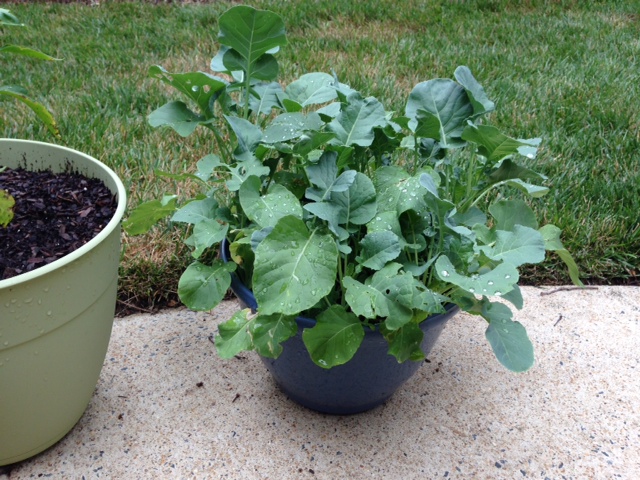
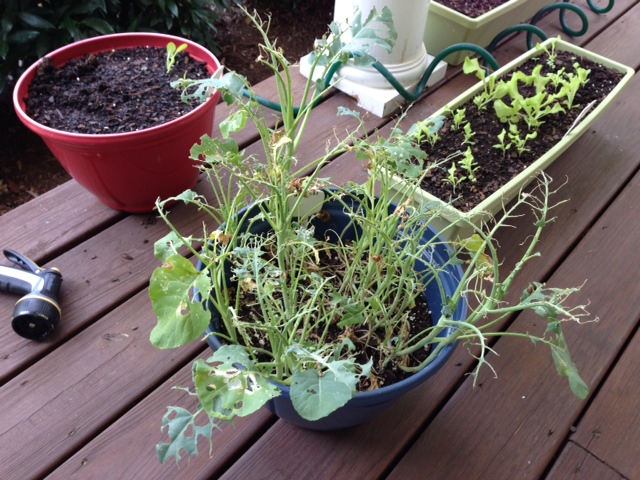
brocThe horror…stupid cabbage worms and yet another species of worm defoliated my broccoli in a day. I bought some Ortho spray (forget the name), but it didn’t seem to slow them down at all.  Oh well, guess it’s part of the learning process. I have to see what kills the damn bugs, that and plant earlier.


On a happier note, the lettuce is going well (see it in the background)  and I should have a good second crop in 2-3 weeks. The trick is to sprout the seeds indoors and transfer to the planter, works great. I have some Jericho lettuce started today using this method, the red pot has two plants that made it but they suffer from near-zero germination in warm weather just like Simpson. It will be interesting to see if it’s any different, the Simpson is sort of delicate and wispy.

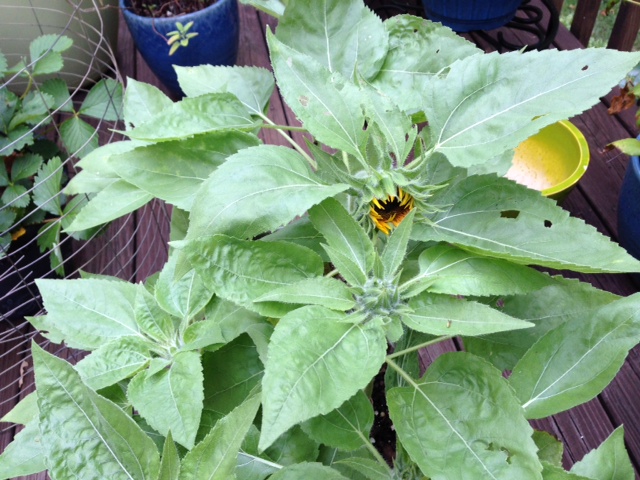
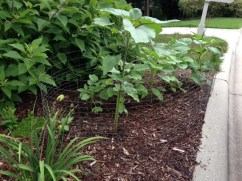
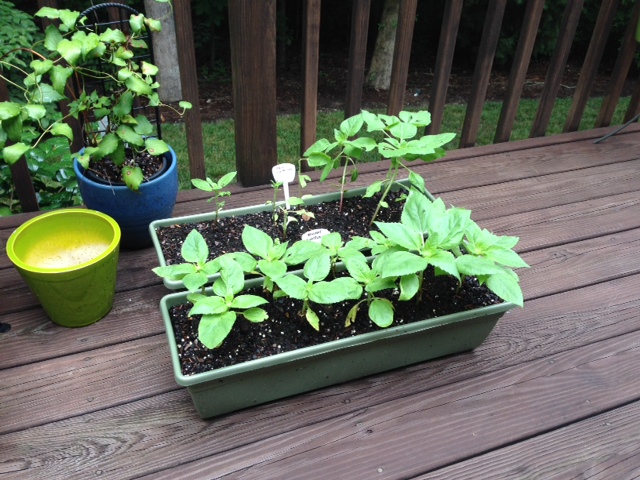
Sun1YAY!! A Sunflower is peeking out! This is part of 20 plants jammed in two planter boxes, the seem to like it OK but don’t get nearly as tall as the ones in the dirt. Which is good, since they’d topple over.  I have high hopes for these, assuming I can keep the 4 legged pests at bay.


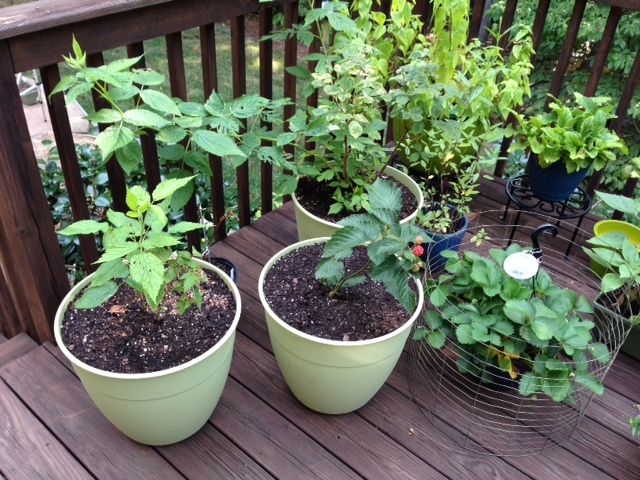
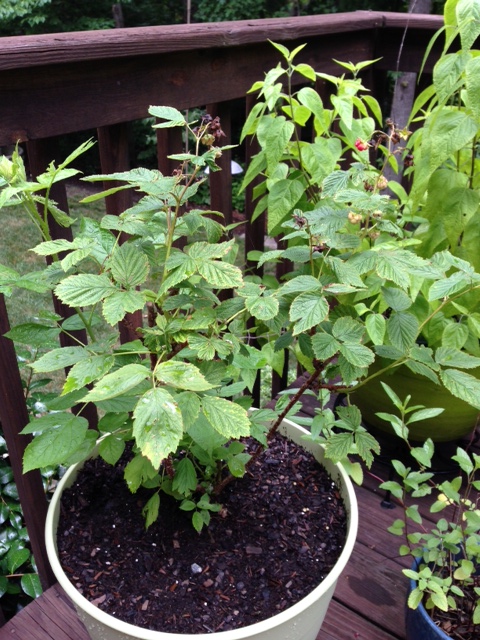
berriesThe berry patch. One Heritage Raspberry, one Black Satin blackberry, and another everbearing that I forget. Looking good, they love being in the big pots and are thriving. Sadly, I bought two each of the latter but the retards at BerriesUnlimited shipped them sideways jammed in a tiny box with only some foam peanuts to cushion the plants. I’m keeping those watered but I think they were killed in transit, one busted off the main cane and the other was shocked by overpruning.  We will see come spring, but I’m deeply skeptical I’ll get plants.

Two more lessons of the mini-garden

Anything in planters needs to be watered 2-3 times a day, and very few things want full sunlight. Bell peppers want to be shaded, they only get an hour or two afternoon sun and they are happy. They were wilting and losing their buds until I moved them on the porch. THis is actually good news, as my property has a lot of shade. 2-3 hours of good light and most things seem to grow just fine, at least here.  


Belated update on the 8 year storage results

I forgot to mention a few things when I posted the first round. In no particular order:

1. Powdered milk in the box = iffy. It looked sort of yellowed and smelled odd, it may have been OK but I’m recommending buying it an a vacuum sealed can. I need to break some of this out (I have that as well) and see if it is usable, I hate to blindly assume it’s OK.

2. Potato flakes in a box = fail. This was a 24 month in my pantry test, I made some up and noticed it was not white and tasted like used gym socks. Same thing as the milk, go with the #10 cans and test every few years. Maybe better at 60F, I dunno.

3. #10 cans= win. Even with a half-assed plastic box wrap in a really humid place, none of the cans showed any rust or degradation. I’ve since sealed the space, and ziplocked/dessicant bagged so I should be good for another 25.

Mini-garden pics

Compare the original “just geminated/planted” pics to these.

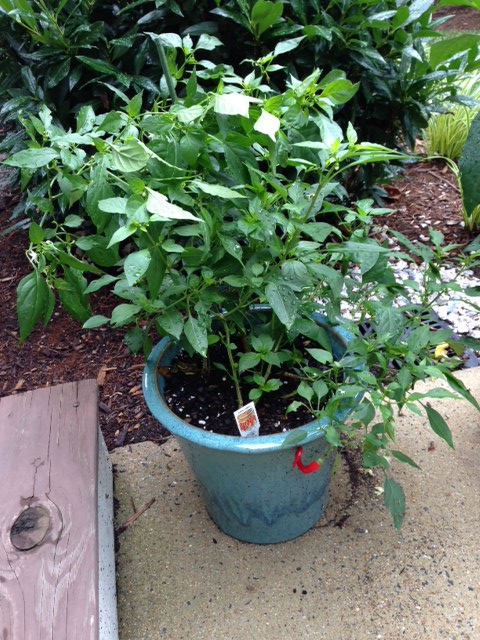
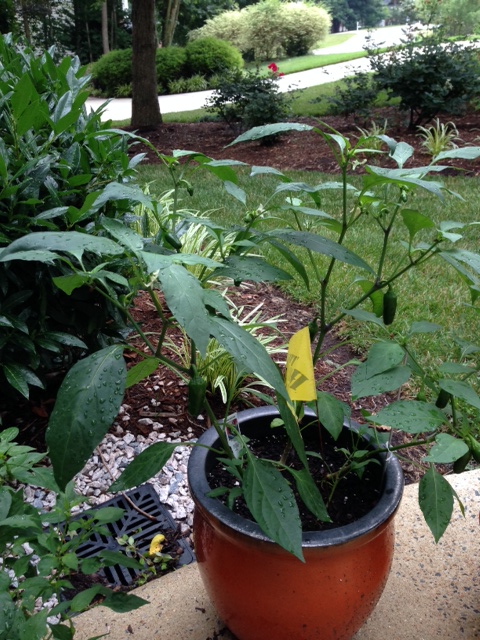
Bell Peppers, Hot peppers (see the red ripe one..)

Bell

Hot


The bell peppers are just starting to peek out from the flower buds, teeny weeny things right now.

Jalapeno Peppers

Yielding like a mother, just had one. OMG. JalThey are so tasty, just the right heat. Got 25 seeds from one slice, I’ll see if it germinates.


Broccoli. Rocking in the woefully small pot, no heads yet.

Broccoli


Here’s everything else:

Onions,Carrots (made almost 100% and are now transplanted), Front sunflowers (to the right next to the curb)Onion

Frontsun


Rasperry, deck sunflowers (babies) DecksunRaspberry


The bad bunny ate some of the back sunflower plants, so they are up on the deck. Ordered two more raspberry and Darrow blackberry plants, they will be here soon. I’m hooked on having these berries every day, I just walk out and pick some and drop ’em in my cereal. I only get a few every other day, but I should be getting loads with 5 plants going. I’ll need to T-trellis them next year, but they are manageable now.

Spring Wheat

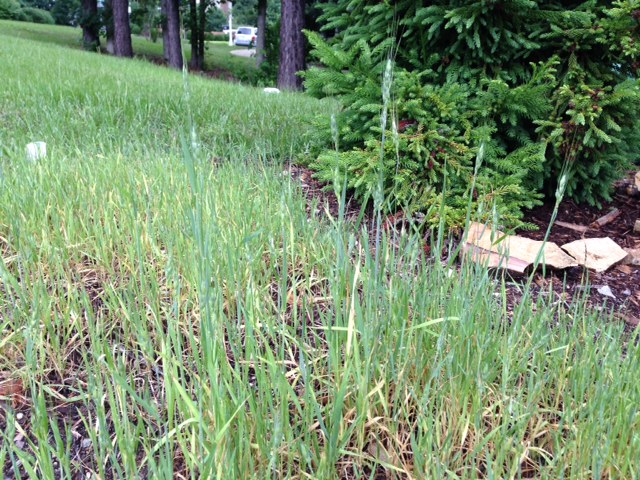
SpringWheatIf you look closely, you can see the green wheat berries and head on the taller stalks. The crop is a lot shorter than I thought, Ag sites says 2-4 ft but I recall it being way taller. Maybe it’s going to grow more, but to be heading out is odd. I saw some winter what that the combines were just getting ready to go into, it was really short too so maybe that’s what we get here.


All of this (except the wheat) is being grown in planters in minimal space, it could fit on a balcony or even in a sunny bay window. I think someone could have a decent amount of produce in a 6’x6′ area, especially if they build a rack like a gym bleacher or step ladder to use the volume.

Pretty amazing, really. And I’m just going through the exercise of growing everything on my Day366 list to make sure I can do it for real if needed. It ought to be just a matter of scaling it up then. I’m a ways off from getting through the list, this was the easy stuff and I’ll be doing more exotic things like vertical potatoes, sugar cane, rice, peanuts, beans, and sorghum later.

Odds N Ends

The lettuce has ended, started another round of Simpson leaf in a planter but zero germination. Not sure what happened, but going 1/8″ deep this time to see if I can get it going mid-summer.  Trying spinach again, 5 of 10 came up in partial shade so reseeding that at 1/8″. Kale is kicking it, 4 of 4 and sprouted in 3 days. Replaced the original lettuce with Jericho (warm weather variety) , and started a pot of Orach which is some Asian green that likes it hot. All this is an effort to make salad year round, need that green leafy veg.  Supposedly fall is another time to grow all this but I’m skeptical, it seems to only like cool weather with rain and overcast.

The mini-garden at 60 days

Results

We are now eating some of the mini-garden produce, so far just Romaine lettuce and raspberries. TOTALLY WORTH IT!!! I never had off the vine berries, oh man they are good. So this effort is paying off aside from any emergency planning aspects.

The goal of this project was to plant everything intended for the long haul, to see:

  • How each seed came up and how robust the plant was in our climate
  • How much area was needed for each plant
  • Any special considerations (amount of light, water, pests)
  • What was the yield per foot
  • If the plants could be successfully propagated, i.e. hybrid seed recovery/storage/germination

I should have a good idea of 1-4 this fall, bullet 5 next summer.  I’ll also plant the fall stuff to see what happens, although the containers will complicate things. It’s not the same as being in the ground, I’ll bring them inside so they won’t freeze but no idea if that will interfere with the natural cycle. Probably not, we’ve had strawberries winter over that way and be just fine next spring. Hopefully that’s the case with everything else.

Lessons learned and other tidbits

Pests

Definitely needed rabbit fencing. My first round of sunflowers nearly got mowed flat by bunnies, the little ones seem to be the culprits. Putting up 24″ high graduated rabbit fence fixed that, so any garden that is accessible will need to be fenced in.  You will need to acquire enough rolls to go around the vulnerable plants, with stakes. May need to bury it 6″  to keep them from tunneling under, although I haven’t had that happen yet. Cabbage worms infested the broccoli, we picked them off but it’s wise to have the Bt or other spray on hand. They would have stripped the plants had we not seen them soon enough.

Containers

I’m leaning towards long planter boxes as the best solution to container growing. They are light, cheap, volumetrically efficient and stack for storage. Pots are OK, they look good (we have a bunch of really nice ceramic decor units) but are cumbersome and waste precious space. I’m contemplating making up some wooden stands, sort of like bleachers but with treated 2x2s. I think you could get a TON of planters in a small area, it would be mostly vertical up to 5 ft.  A 60 degree angle would minimize the footprint. That’s next year’s work though.

Sunlight

All the seed packets say “likes full sun”. Maybe that’s full sun in Norway, but down here it nukes the plants. Lettuce and spinach need partial shade, as do the bell peppers. They seem to want the light but need misting in the afternoon to avoid wilting. Everything else is OK so far, it might be that I started the peppers as nursery seedlings didn’t harden off enough. The ones I grew from seed seem to be holding up better.

Onions have risen from the dead

I was planning a wake for these guys, they were all dejected and droopy but have rallied. The initial shoots looked awful, but they took off after I stopped fooling with trying to trim the shoots and moving them around for best lighting. I figured they either lived or died and there was nothing else I could do. I put a few in the ground, they are good but I need to figure out how to get the seedlings out of the starter pot and separated. I went overboard with seeds, I only needed 3-4 but I have an onion forest. Good problem to have I suppose…

Successive plantings

I’m going for round 2 on the lettuce and carrots, I want to see if I can stage them to produce the rest of the season. Also trying the spinach again, this time in a planter box and in shade.

Kale

It would be tough to get enough calcium without dairy, turns out kale is high in that. We have seed on hand, so a planter of that went in. It’s with the rest of the greens, hopefully it makes it. I’ve not eaten it raw, no idea what’s it’s like.


The spinach bolts..and the need to try things out

The wheat is now 6″ tall, it looks just like fescue and seems to be doing well. Sun flowers all came up fine, BUT some of the babies got scythed down by the multitude of rabbits roaming the ‘burb. I sprayed ’em with hot pepper solution, it didn’t really do much except to stain the leaves and make them sad looking. Some survived and have decent stems, I think the rabbits only liked the new growth ( mature stalks are really tough).  I went ahead and planted 8 each in long planter boxes on the back patio, it gets 5-6 hours of sun and is pest-free so maybe they will do better initially.

Onions are being difficult. My starter pot is full of spindly babies, they supposedly love light but seem also to fall over in full sun. I’m trimming them to 4″ to foster stem girth and basically pampering them full tilt. I have 5 more started in the ground, out front by the sunflowers, so it’s Darwinism time. They may need to be outside in dirt from the get go, we will see.

Lettuce is small and slow growing, they are getting there but they might bolt before I get enough to make a small bowl of greens. Spinach is over, bolted, so we are eating what’s left and letting the rest go to seed. I discovered spinach likes cool weather, so that means I get like 2-4 weeks after the last hard frost and bolting (spring), and who knows in the fall. This area flips to hot and stays there until October, so salad greens may be highly seasonal or just a buttload of small stuff when I can grow it.  Hot peppers? Hell yeah, they are booming so there’s gonna be plenty of fiery “apocalypse produce”. That was supposed to be a occasional spicy treat, not sustenance but I’ll take it.   Thank God something’s actually yielding. Broccoli looks good so far, carrots OK but small, bell peppers in the Jalapeno category i.e. rocking. Those were seedlings, but I also have seeds coming up as well.

The lesson is to ALWAYS TRY THE PLAN BEFORE THE CRISIS. There’s so many things that go wrong, there was no way I could simply dig up my yard and plant random Home Depot seed  and expect a cornucopia to blossom forth.  Yeah that sounds retarded but seeds are a part of most survival packages, sort of pointless really without the practical experience of actually growing things. I’m learning a TON of things about gardening, I grew up on a farm and we had one but I didn’t pay enough attention to what was going on. I actually was more into my Mom’s activities, pressure canning and sewing but i didn’t pick up that much there either. More than gardening, sadly.

Last random topic: sugarcane.  I was thinking about how to make sugar, checked into bees and decided that was a bad idea. But, you can raise sugarcane here and it grows like weeds. You cut the stalks, press, then cook the juice and voila it is syrup. I’m trying this next year, along with raising rice in a mini-paddy.  This is a lot of fun, plus I get valuable survival skills just in case.  And it baffles the neighbors.


Small scale planting results

Vegetables

I finally got around to planting a few vegetables, a tiny plot of spring wheat, and sunflowers. I have very little spare area, it’s all landscaped so I did the vegs in pots:

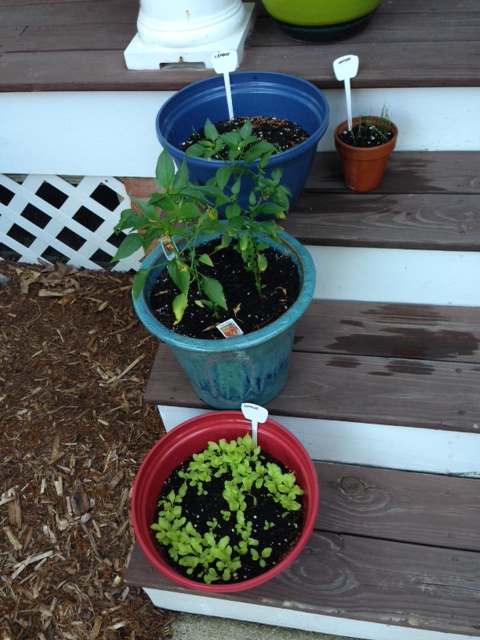
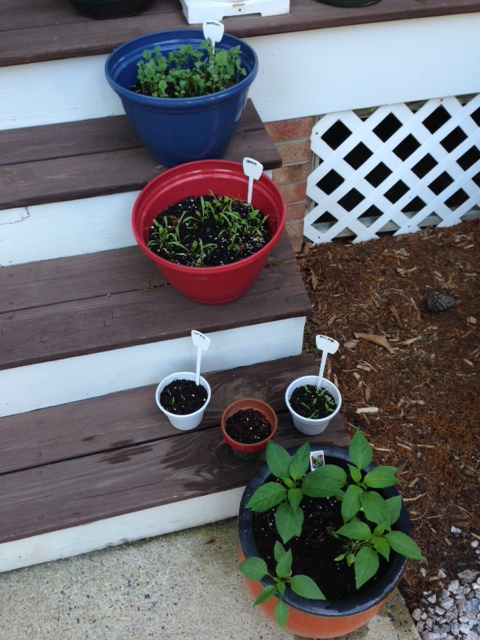
pots2 pots1


Onions, carrots, Bell/hot peppers, lettuce, spinach, and broccoli.  All seeds sprouted just fine, they will be cramped in the pots but we will see how that goes. This is about cramming crops in small spaces, most of us won’t have a lot of area in a crisis.  I need to build potato towers for the root vegetables, got the storage figured out (sand boxes and net bags) but nothing to put in them yet.

Wheat

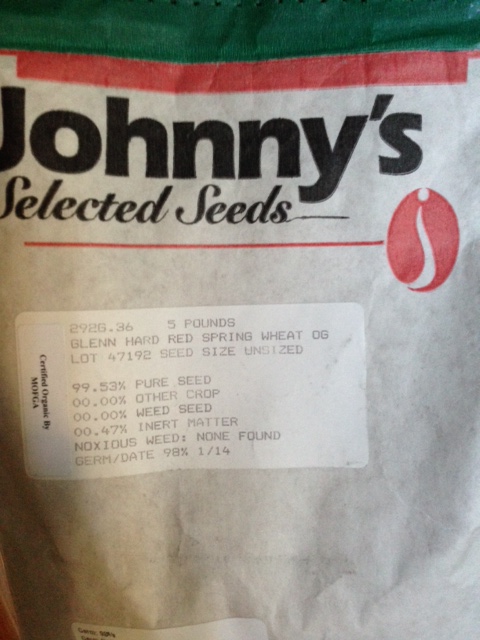
Nothing to see on the wheat, hasn’t come up yet but here’s the seed:

seed

5 pounds of hard spring wheat. I hand broadcast versus the standard row/seed drill method, should give me the densest plot and yield. If I’m super lucky, I can make a small loaf of bread when it’s done in the fall. The soil here isn’t really what I was used to in the Midwest, more clay so it may not yield the same. It’s tilled down to about 8 inches and augmented with organics, weather is the same so maybe it will be OK. I found an idea online for a thresher, it’s a section of threaded rod with two chain flails driven by a drill motor. All that sits in a 5 gallon plastic bucket, they dumped the wheat heads in and churned it up until it was all threshed. Winnowing was with a fan, pouring it on a tarp.  Good idea, but I immediately though of improvements. I want to mount the axle in bushings, add more flails, a screen to catch the stalks and big chaff, a hole in the lid to feed the wheat stalks, and second bucket below with a fan blower as the winnower.  That will wait until fall, nothing to test it on….

Sunflowers

Nothing to see here, ’cause just put them in. I planted a variety that produces the highest weight of oil seed per acre, and a few dwarf ornamentals to keep it from looking like Wierdo Beardo’s commune (although my wife differs).  Once these come in, they will get go in a homemade press for sunflower oil.


The point of this exercise is to gauge how much seed and area I need to produce a given amount of grain and vegetables. I also want to let things go to seed and see what will come up the following year, the seed is hybrid and won’t grow true but should do something.  One thing I did find is how viable seed is in the fridge, we had some Batchelor Buttons from 2008 that all sprouted. So, seed seems to be a low-risk factor and you can buy a load of it for very little money. It’s great insurance against a food shortage assuming you can hang on for the time it takes to grow.


Life on Day366

So what would we be doing on Day366? That’s where my thinking led me after running though the minutia of planning, i.e. “oops I just ran out of everything” after surviving whatever it was. I realized that the situation would be analogous to being a homesteader. You get off the trail, go 300 miles into the wilderness with your wagon and set up shop. All you have is what you brought, and what you can grow/hunt/collect.

They key is having access to land. You need at least 1/4 acre to put in enough garden items in quantity to last the year. Most people (me included) live in built up areas and suburbs, so there’s some area but not enough to put in cereal crops and keep animals. Here’s my current plan for subdivision farming, it’s in the initial phase but I think it’s viable:

1. Go vertical.

There are planters that can be set up to grow in multiple layers, that’s needed to maximize the volume of plantable soil.

2. Potatoes.

 Spuds yield well in planters, and would have to be a staple to provide enough calories. I can’t think of any other crop that beats it for yield. They keep well, and propagate from eyes on the parent tuber.

3. Sunflowers.

Hugely important, as they provide nuts and vital oil. This is probably the only practical way to obtain vegetable oil off-grid, and without fats and oil you starve. There are small-scale screw drive oil presses on the ‘Net, they seem to do a good job of extracting the oil and are reasonably priced.  The sunflower plants would need a lot of area, it would be a split between those, a garden, and wheat.

4. Garden.

The usual mixes, planted in said vertical pots. You would need to devote more space to things that can be stored in a root cellar, like onions, carrots, beets, etc. Come winter that’s all that’s available.  My parents had these special wood bushel baskets for that, everything went in there and in the vented crawlspace/basement. I’d need to score baskets, I have nothing like this now.

5. Wheat, corn, and other cereals

I think you’d need some amount of corn and wheat, although I’m skeptical that you’d get enough in to make a large quantity of kernels. It takes a lot of plants to yield, typically 50 bushels/acre. So it looks tough to get enough cereals out of a small plot to live on.

6. Wood.

Technically not farming, but this would be the only way to cook and heat. Harbor Freight makes a $170 cast iron wood stove, that and some 6″ black pipe and I’m set. Have to go cut wood and season it, but we used to do this and I’m very familiar with it. Byproduct is ash, that can be used to make lye and then soap using the sunflower oil.  PITA, but doable.

Well, that’s the extent of the plan. If successful, I’d have the same standard of living of an 1850s Irish peasant, alive but none too happy.  This is what the plan lacks:

  • Meat. Need chickens, that would be fabulous. We ran a small poultry farm, so again I know how but I have none on hand.
  • Milk/butter/cream. This is pretty much out of the question, without dairy cattle.
  • Sugar. Comes from beets and cane, not happening. Maybe bees, but once again I have none.
  • Fruit. There’s a possibility for strawberries and blackberries, but they can be hard to start up. Can plant trees but takes years to produce.

I will be trying all these things out in small scale, to see how they work. I researched all of this, it’s just a matter of buying the seeds and a bit of equipment.