Media bias against emergency preparedness

I just received the latest issue of the Economist, and this was a featured article:

Preparing for the apocalypse

I will survive

When civilisation collapses, will you be ready?

This is typical of media coverage of any civil defense or preparedness, they go out and interview the most far-out people they can find and represent that as the norm. The title is exactly what anyone should NOT be preparing for. No apocalypse, no collapse of civilization. Civilization will continue, but to assume every aspect of life will go on just as it does now regardless of circumstances is just foolhardy.  I really wish there were no paranoid gun collectors living underground pimping MREs and iodine pills.  It stigmatizes anyone who practices preparedness, regardless of the nature or extent of that activity.

I recognize and understand the statistical unlikelihood of having an emergency, but that’s not to say it will never occur. And, we never know what could happen so it’s not a bad thing to be ready, as long as that doesn’t become an end to itself or interfere with daily living. For instance, years ago we have suffered through several ice storms with extended power outages, and were not doing that well after a few days. If we had had just some of the things we have now, we would have been comfortable versus freezing our asses off, in the dark, and piling food outside to keep it from spoiling.

I can’t talk about any of this in the open, so I can only post on-line using a pseudonym. It would be great to involve my neighbors but I know where that would lead so I don’t. It seems to agitate liberals that preppers are secretive, that it’s somehow selfish versus a reasonable position given the circumstances.

Finally, the thing that really irks me is the gun fetishes. Guns are such a polarizing subject to begin with, then to opine on how it’s going to be Stalingrad every day so you better stock up is just ridiculous. I will touch on firearms one day, but I sincerely believe they are a last resort and in all likelihood not going to used in anger. Thirst/hunger/fatigue will prevent most of the trouble mooted on message boards.

Sure would be nice to have a more balanced view of the movement, I did see that younger people are getting into this but more on a local/group level vs the survivalist. I haven’t seen much coverage but maybe it will become more mainstream one day.


Geiger counters and Black Swan events

Now that I have a lot of my mid term plans and supplies done, I’m looking at long term, mobile operations, and “second-order/Black Swan” scenarios.  By that I mean things that can happen, but are not as likely and not worthy of attention until everything else is done.   One of these is a nuclear exchange or a long term loss of grid power (nuclear fuel fires). For that, I still need everything I already talked about but also a way to detect gamma/beta radiation and some type of fallout shelter.

Detectors

There are three types of radiation detectors on the market; new lab grade survey meters, low cost Geiger counters, and government surplus. The problem with the first is expense, to cover the range expected in a crisis would take thousands of dollars. You can’t get a decent instrument that will cover 1 mR to 500 R/hr, the closest I found was Ludlum’s in Texas but they are not really customer focused and you’d need add ons to get the range. Plus it’s expensive.

Amazon/Ebay stuff is usually gimmicky/low cost with a low max rate, usually less than 0.1 R/hr which is OK for things like high school science lab but not for even low levels of fallout. You have no way to know whether or not you’re getting 1 R/hr or a 1000, which is the difference between living and dying.

And then there’s CD surplus. It seems there are large stocks of 60s/70s Civil Defense meters being released into the surplus channels, so one can pick up bargains. BUT, these things have been sitting around for 50+ years with a lot of it inoperable. I was lucky to find this guy:

http://www.uraniumrocks.com/

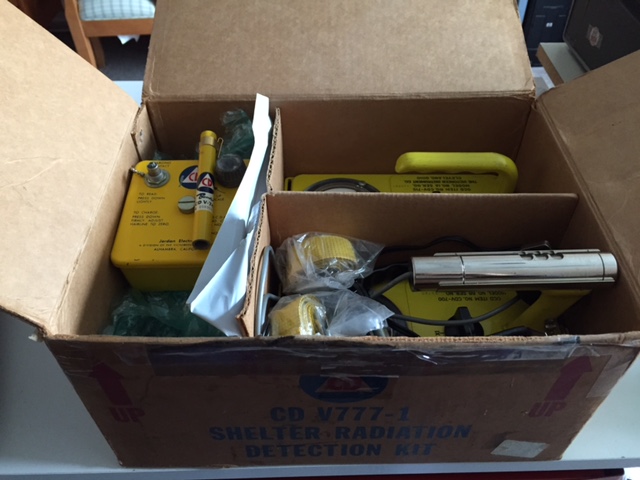
He has repaired and checked CD-700/715 meters and dosimeters, plus I scored a complete NOS shelter kit:

IMG_1396This covers all bases, from low level to lethally hot AND has the dosimeters. Price was right, too. You need a check source, you can use uranium ore or Peerless lantern mantles which are commonly available.


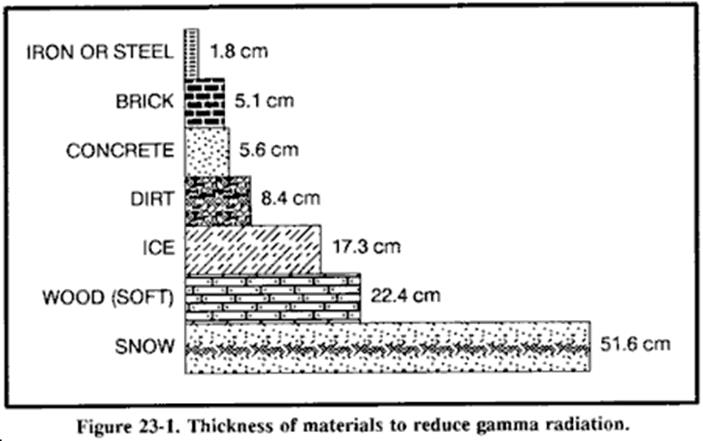
OK so what about shelter? Well, that’s one of those things that people just love to debate and go for the overkill solution. Most hard core peppers end up building versions that will ride out a near-miss from a surface burst. Unless you are within 75 miles of a hard target and expect a full up exchange, I’m not sure this is appropriate. Fallout tends to disperse in high concentrations close to the source, and decays exponentially with time. Most people can get by with less protection. The rough rule for exposure is keep the dosage to less than 125 rads in a month,  and it’s probably going to be less than 100 rads/hr for the initial rates. Doing some rough calculations says you need to reduce that by a factor of 16 to keep from getting ill.  That takes 4 half thicknesses of shielding (2^4=16), which can be obtained by about a foot of earth or 10 inches of brick or cement. A typical frame house will give roughly one half thickness, if you shelter in the innermost lower part OR the basement/crawl.

HVLYou need three additional half layers, the old CD books say pile up dirt but that’s impractical. My solution is: Sandbags. I have an 8″ brick walled above ground basement , so I only to add bags above to get the protection from the fallout coming from tree foliage and the roof.  When I first started thinking about this, I was focused on digging something but then realized that wasn’t practical. Not only would people think I’d totally lost it, but it’s not needed and would be a PITA to keep free of water, ventilate, and would be claustrophobia inducing to boot. Not to mention a tough thing to remove if I move.  Polypropylene bags come in white, OD, and beige and are 37 cents a pop in lots of 100. They store small, can be filled when needed, carried, and can be used to create a defensive fire position if that’s ever needed. I want the stuff I buy to serve multiple purposes, which these do.


The winter garden

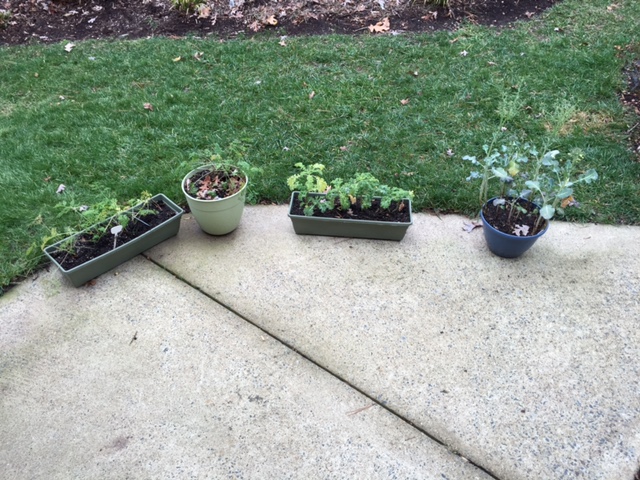
IMG_1395It’s almost Christmas, and the carrots and broccoli are still green and outside. This was an unintentional experiment, I was too lazy to move them indoors but now it’s fun to see what happens. Average overnight temps are in the mid to high 30s, and it can get in the 60s during the day.


The broccoli has flowered already, and doing it again which was a treat. Delicate yellow flowers in the late fall and winter, they are what comprises the broccoli heads before harvesting. Mine were tiny and hardly worth cutting, but they made great blooms.

Onions, peppers, and berries are in the garage and are producing but very slowly. I enjoy getting berries in December, and the peppers will probably ripen in the spring when the temps go back up.

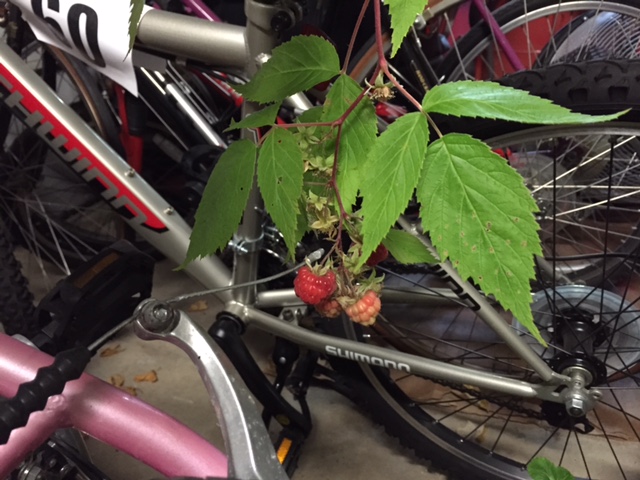
IMG_1375Berries!

Both the Caroline and Heritage plants made a third crop, these are the berries.  Blackberries are outside overwintering.


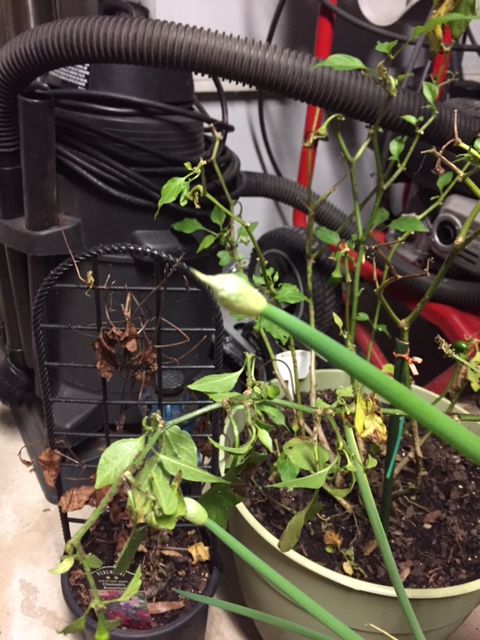
Onions making seed pods

IMG_1394I got a ton of green onions from the other pot, this one was an experiment to see how long I could stretch it and still get usable produce. Seeds pods were a mulligan… Mild hot peppers are in the background, creeping along.


Other developments

I harvested seeds from just about everything, they are in paper envelopes in the fridge being dormant. I will plan these guys next spring, fingers crossed I’ll get plants despite them being hybrids.  Winter wheat went in last week, I learned to plant the correct density and to add the correct top dress nitrogen fertilizer at sowing. This is what the farmers do, I’m learning agonizing slowly what they all know.  Apparently spring wheat isn’t too common here due to the heat, mostly winter wheat which I was about a month behind on getting in.  The summer/fall crops I put in were stunted and moldy, lack of nitrogen and bad timing. But they did make wheat berries, which will get planted come March. I could have three wheat crops, just about evenly spaced in time but the late summer would be iffy.

Sunflower oil

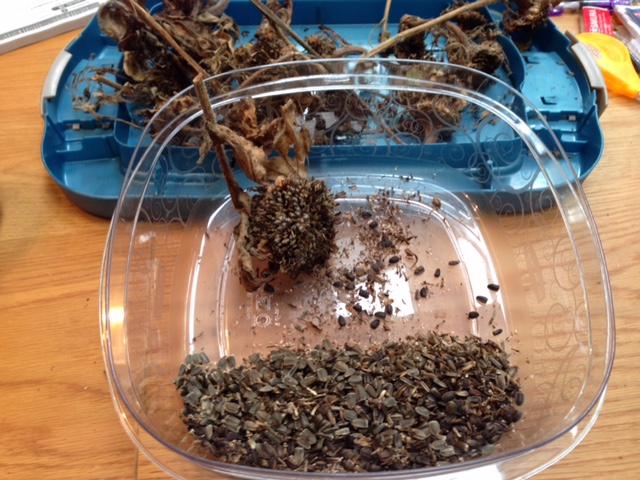
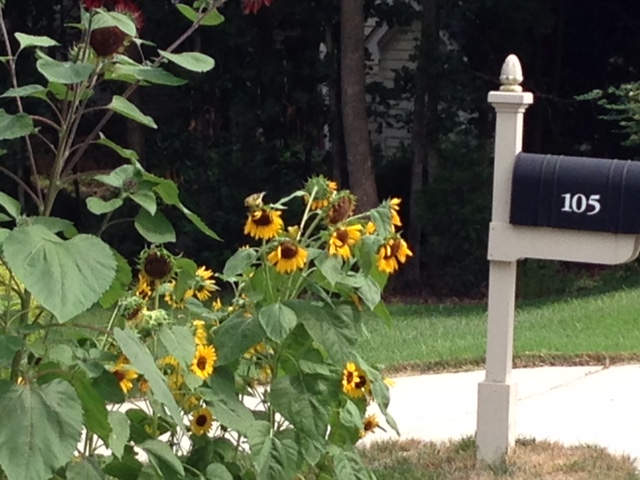
Here’s some of the seeds I got from my sunflowers. IMG_1341


PITA to get the seeds off the plant. I found a link to a homebrew oil press, and got the steel pipe to fab the outer housing. Looks like I have to stick the seeds in blender and then heat and compress the pellet to extract the oil.

http://journeytoforever.org/biofuel_library/oilpress.html

These seeds weren’t the kind you see in the store, they are less robust and the husk is tightly bound to the kernel. I have about a 3/4 quart of oil seed, hopefully I can get some oil to see if it’s worth a damn.  If not, I can buy some seed to test the press and then fool with the sunflowers later. I will eventually need to build or buy a huller, apparently they are very uncommon and don’t work worth a hoot. The principal is simple enough, a rough rotating cone working in a tapered bore with a feed slot and adjustable spacing but they execution is bad.  I can fab a cast iron model but I might try to score an antique off Ebay to save time.

Flying Pests

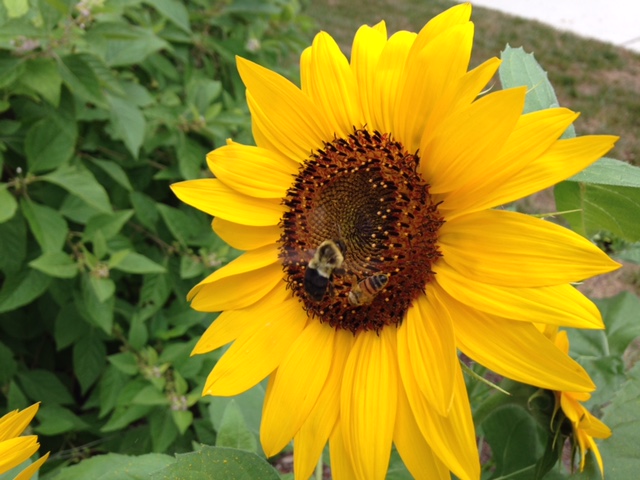
Look closely. Fargin’ goldfinches pillaging my plants, so a lesson is to factor that in. I figure a 50’x50′ area will produce way too many for a few birds to make a dent in.  Bees LOVED these, which offset my fury at the finches. But who can stay mad at them, they are just too darn cute.

IMG_1267


IMG_1244